Showing posts with label rice. Show all posts

Saturday, 19 May 2012

an attempt at risotto

I haven't been able to find arborio rice here in China. I don't have my beautiful heavy-bottomed, perfect-for-risotto pot. Although I am perfectly happy to spend a long time cooking just for myself, I wasn't sure I could bring myself to spend an hour on my own stirring risotto in the hot, poorly lit kitchen. But my old uni friend S was passing through Beijing, and brought me a Chinese red wine that she promised was really good, and I thought maybe I could give it a go.

It turns out, despite all bottles of wine being sealed with corks in China (cork-corks, not plastic corks), cork screws are difficult to find. So I poked this one out with a chopsticks, into the wine, and decanted the remainder into a glass bottle I had lying around.

At the local supermarket I managed to find a short-grain rice, and though I'm not sure what it is it's definitely not arborio. I forked out quite a lot for some olive oil, and decided to make a mushroom and tomato risotto.


oooh risotto

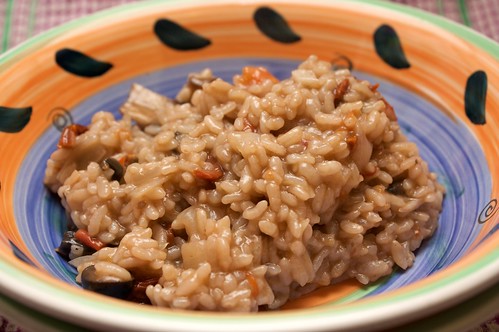
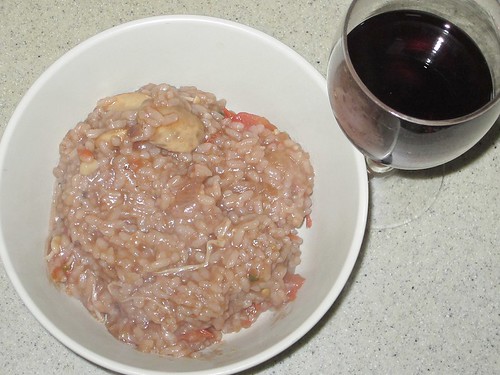
The risotto turned out softer than it should have, almost congee-like. I love mixing mushrooms, so I went for a couple of button mushrooms (delicious and familiar but fairly expensive here), and enoki mushrooms. I also caramelised half a red onion, and added a tomato in my usual risotto-y way, before heaping in the red wine and the stock.

It was a nice moment of familiarity, and I'm glad I had the wine to do it, and it was expensive compared to the other stuff I cook but not too pricy. But the congee-like consistency made it a little bit weird.

Wednesday, 7 December 2011

eight treasures rice and vegan compromises

sticky rice on a stick


Being a vegan in China can be hard, and sometimes you try your hardest and you still can't be sure. I've been having a lot of problems lately, judging myself and worrying about being judged. I went to a Greenpeace event a few weeks back, where a (white, British) vegan scolded me for going to non-vego restaurants with my non-vego friends. The first vegan I met here, on my first day, came with us all to a restaurant and then didn't eat a thing. She told me she never eats at non-vego restaurants, and I thought at first, that's a bit hardcore. But having been here five weeks now, I realise it's what she has to do to be totally confident that she's living animal-free.

The only time I'm confident that my meal has no animal products is when I'm in my house and I'm cooking for myself, and when I visit the vegan restaurant down the road (and most of the time I'm confident about the vego restaurants, too, if I ask the right questions). The term vegetarian food (素菜) here is generally understood as 'there's no meat as a main ingredient', and it sometimes means I get a bit of a mince garnish on my beans, a little pork in my eggplant. Today at lunch I asked 'does this have meat?' The chef looked at me and was like 'why?', as if it was a ridiculous question to ask. I once asked 'does this have egg?' and got the answer, 'it doesn't have egg, it's sweet!'; but I'm pretty sure it had an egg-wash. I giggled and ate it anyway, because it was a friend's grandmother and she'd gone to so much effort to get vego treats for me.

I'm making these compromises or having these questions at least a couple of days a week. I try my hardest to stay vegan, but even speaking Mandarin I can never be quite sure, and I worry about what people would think, if they knew that today I picked the egg out of my meal and kept eating rather than having to miss lunch.

This is part of the reason why reviews have dropped off. I've eaten a lot of amazing meals since I've arrived here, and my friends in Beijing, every one of them a meat eater, let me pick almost every dish when we go out for food. I've discovered some delicious local dishes, filled with unexpected combinations (cabbage + glass noodles, I don't know how to describe this wonder). I'm for the most part content with the decisions I'm making, but I feel like I cannot with confidence recommend these places to people, for fear that I'm wrong. I've made my peace with knowing I lose my vegan powers intermittently during my time here, but I don't want to put other vegos and vegans unknowingly at risk. I'm thinking about starting to review the places I go to, but adding caveats about how hard it was to be confident it was vegan and other things like that.

Anyway, this eight treasures pudding on a stick. I thought it was vegan but in hindsight I don't think it was, which pisses me off because it was delicious and in a way serves me right for being too intimidated by the Jinan accent to ask. Steamed in a bamboo stem and served on a stick and filled with fruits, what genius! Also genius: the eggs on a stick. Cracked into moulds and fried on to the stick. Obviously not vegan but interesting to look at.

Tuesday, 16 August 2011

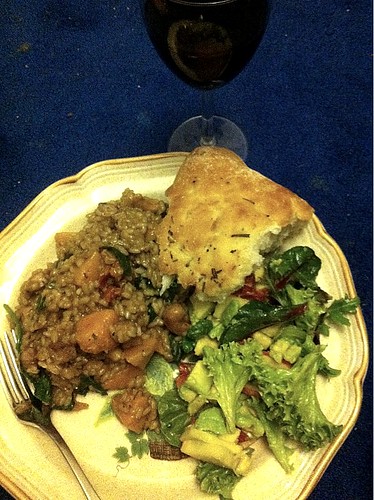
pumpkin + tofu risotto

For the first time in three months, could this be...A RECIPE?! I'm not even sure I remember how to do this.

there's tofu and pumpkin in there somewhere


pumpkin and tofu risotto

ingredients
300g firm tofu
2 cups arborio rice
half a cup of cashew nuts
some sundried tomatoes
a handful of baby spinach
500g(ish) pumpkin (i used jap but butternut is also okay)
1 brown onion
however much dried oregano, basil rosemary and marjoram takes your fancy
a whole lot of vegan chicken stock (massels you're my hero)
a little paprika
a bottle of red wine (you will be drinking some of this red wine, not pouring it all into the pot)

method
dice the tofu into cubes of about 1.5cm. put these cubes into a bowl, and throw in some of the red wine with a dash or three of paprika and rosemary, and stir to combine. put the tofu aside to soak it all in.

slice the onion, and skin and dice the pumpkin, and throw it all into a pot with some oil. let this fry for a bit, then add some herbs and maybe some more paprika and the cashews, then the rice, a cup of wine, and some stock. let it simmer and stir it, in the way of all risottos. at this point, fire up a fry pan and bring some oil up to heat, then throw in the tofu. stir this occasionally, until it starts to brown on most sides; then add it to the risotto, and keep adding that stock. add some more wine if you like. now is a good time to add the sundried tomatoes, too, chopped into little pieces. keep adding stock until it reaches that lovely risotto consistency, then throw in the spinach, let it wilt in, and you're done! serve with something delicious. the risotto seen here was served with an avocado and apple salad, and some rosemary bread from coles.

Monday, 11 October 2010

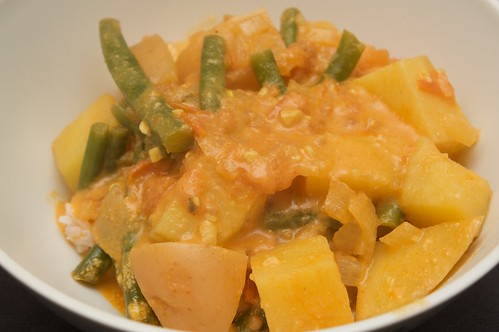
easy bean + potato curry

One of the things I love the most is curry. I love simple curries that require nothing further than throwing some things from jars into a pot, and I love complex curries that require me to start thinking about it a full day in advance, and are a lot of physical effort. I love sampling new curries at restaurants, and curries at new restaurants. I love them all.

bean + potato curry

I threw this potato and bean curry together when I was feeling a bit down and just wanted a whole lot of delicious things, and didn't have to put in too much effort. There was no grinding involved, no pounding together to make a paste; it was fast and simple, with a handful of ingredients and some time simmering on the stove. It was something I made up, and I am definitely going to make it again. I loved the sauce especially - three days later as I was eating the leftovers, it was super delicious.

This curry is medium spicy.

easy bean + potato curry

ingredients
oil
1 brown onion (diced)
2 clove garlic (minced)
a small amount of ginger (grated or minced)
1 tablespoon ground coriander seeds
1 tablespoon ground cumin
1 teaspoon garam masala (make your own if you need the meal to be gluten free)
1 teaspoon tumeric
2 small tomatoes (diced)
4 medium sized potatoes, white or red, scrubbed well and diced
a handful of snake beans, tailed and chopped in to halves or thirds
1 can coconut milk
some stock or water (a few cups at least)

method
Fry the onion in some oil until it's getting soft, then add the garlic. Follow this with the ginger, coriander, cumin, garam masala and tumeric, and quickly fry until fragrant, then throw in the potatoes. Let them fry for a minute, before adding the tomato and some water. Bring to a boil, then reduce and put on the lid. Simmer for ten fifteen minutes, until the potato starts to soften, then add the beans. Add more water if necessary, then simmer for another ten minutes. The potatoes should be super soft. Add the coconut milk, simmer another five minutes, and then you're done!

Serve with lots of mushy rice.

Saturday, 9 October 2010

back blog: election day sushi

Many weeks ago we had a federal election! As is my preference, I headed off to an election night party, to eat food and watch Mr Anthony Green (Australia's most awesome election commentator) talk about the results as he analysed them live to air.

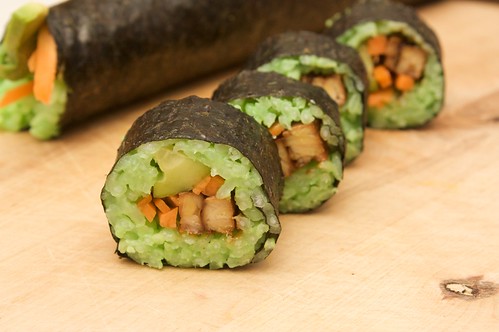
Unrelated to my love of Anthony Green, but related to my love of the Australian Greens, I made green sushi to take with me to this election night party!

green sushi for election day

I was worried that this would be weird, but in fact it was not. It didn't change anything about the sushi, except imbued them with awesomeness.

These sushi were also filled with some green things, such as avocado and cucumber, and some non green things.

Monday, 9 August 2010

in house easy malaysian cookery

Danni was recently away for a bit. I didn't really cook very much, because in the middle of it I went to Perth, but when Danni's away I almost always just spend the whole time eating Malaysian food, cooking experimental dishes, and/or eating corn not-on-the-cob, the latter of which Danni doesn't like.

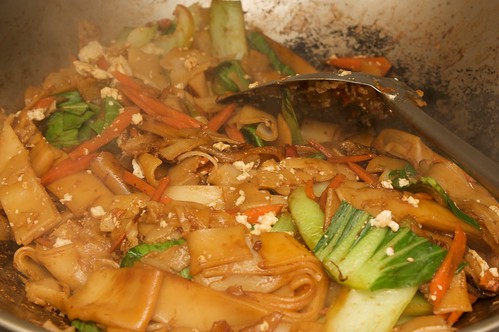
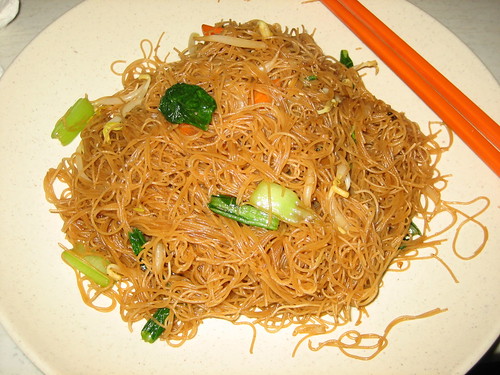
I started with a char kuay teow, because it had been a while and I love ckt.

ckt

I've cooked this and blogged ckt approximately fifty bazillion times, but if you're looking for a recipe I've got one here.

The night before I went away, I spent a while emptying the bins, using up leftovers, and psyching myself up to head across town for a late-night gig at onesixone (my friend Alwyn is in a Perth band, Boys Boys Boys!, and the band was in town for one night only!).

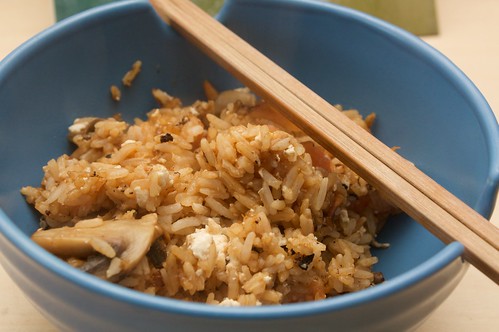
I had some rice, a tomato, and some mushrooms, so it seemed like a good time to make tomato fried rice.

tomato fried rice

Here is an important thing to remember: tomatoes are not really in season in Melbourne at the moment. As a result, this rice was not that good. SADFACE.

For your interest, if you've never made tomato fried rice before, it's pretty simple: slice your tomato in to wedges, and throw in first with whatever else goes first (carrots, if you have them, and a little garlic maybe). When the tomato goes soft, throw in the rice, as well as some tomato sauce (translation: ketchup, not soup or paste or anything), pepper, and a tiny smidge of ketjap manis, fry it around until it's all the same colour, then you're done.

Monday, 21 December 2009

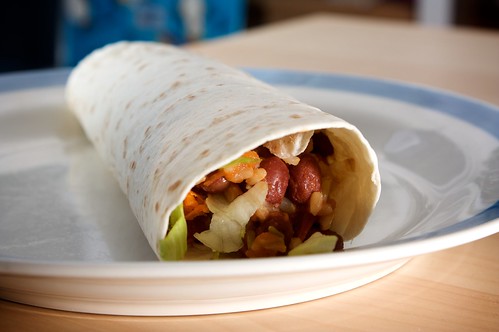
rice and red bean buritto

D made dinner tonight, and we were both feeling lazy and tired and, inspired by several recent posts (maybe by Carla and Wanting Kneading?), D whipped up this amazing rice and beans burrito.

It was so delicious, I only paused in eating it to exclaim "this is delicious!" several times. I'm a little disappointed that tomorrow's lunch is put aside for a work Christmas function, so I can't eat the left overs - that will be D's delight!

burrito

This was delicious, and so fast and simple, I will be making this again very soon. This is only GF dependent on your wrap, so make sure to check.

beans and rice burritos

ingredients
two (small) cups of brown rice
veggie beef stock
1 clove garlic
small branch of fresh basil
a heavy shake each of Mexican chilli, cayenne pepper, cumin, paprika, and dried oregano
4 roma tomatoes (diced)
add red kidney beans (one 400g can)
3 tablespoons of tomato sauce*
just over two cups of water
various delicious toppings (we used shredded lettuce, grated carrot, some salsa, and some really delicious freshly made guacamole)
tortillas

method
Cook the brown rice in two cups of water with half a veggie beef stock cube or equivalent.

In a little oil, fry garlic, fresh basil, chilli, cayenne pepper, cumin, paprika and oregano for a minute or two, then add the tomatoes and kidney beans. Stir well, and leave to simmer for ten minutes with the lid on, stirring occasionally. After ten minutes, check to make sure the mixture has reduced well, then add the tomato sauce, rice, and no more than a quarter of a cup of water. Simmer for another five minutes. Serve warm on an tortilla, with various toppings. Wrap and eat, messily or otherwise.


*I've been getting a lot of 'what is that?' questions lately in regards to various things that I know people have in the US, they just don't know the name we use for it! In this instance, I mean ketchup.

Saturday, 19 September 2009

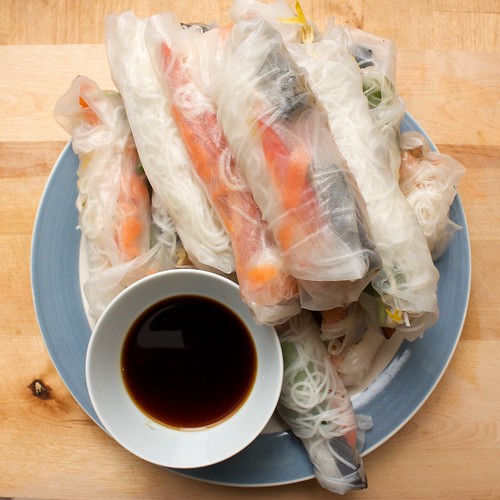
rice paper rolls

Miss T made some delicious rice paper rolls at Sunday's potluck, and it was these we were thinking of on Thursday night when we decided to make some. I love rice paper rolls! They are quick and easy to make (if you have someone giving you a hand, or if everyone rolls their own), and I always enjoy eating something that's basically raw vegetables dipped in soy sauce.

rice paper rolls

For the filling, I made two types of tempeh, garlic + soy, and five-spice. The garlic + soy idea came from Tempting Tempeh, light soy, garlic, sugar, smidge of sesame oil. The five-spice was my usual, five spice + dark soy + light soy. Marinated both sets of tempeh for a few hours, whilst we traipsed out to Collingwood and Richmond for vegan adventures. The rest of the filling comprised of beehoon (rice noodles), thin strips of raw capsicum, thin strips (using the potato peeler) of carrot, and a whole lot of bean shoots.

It was a team effort, filling and rolling the rice paper, and it was delicious. Eat immediately, whilst still fresh.

Use tamari instead of soy sauce to make this gf. and skip the five spice.

Wednesday, 19 August 2009

claypot tofu rice

Claypot is an essential Malaysian cooking style. Cooking in the claypot gives your dish an interesting extra flavour, and it means you can transfer straight from the stove to the oven without a dish transfer, which helps retain all of those awesome flavours. Claypot is quite common at the hawker stalls, and it is awesome. My favourite claypot dish is claypot noodles, but yesterday I thought I'd try a veganised version of an old favourite, claypot chicken rice, combining two of my hometown favourites (chicken rice, and claypot) into the one dish. For this I made a claypot tofu rice. This used the rich flavours of claypot cooking, in conjunction with the simple ginger and soy freshness of the usual chicken rice recipe.
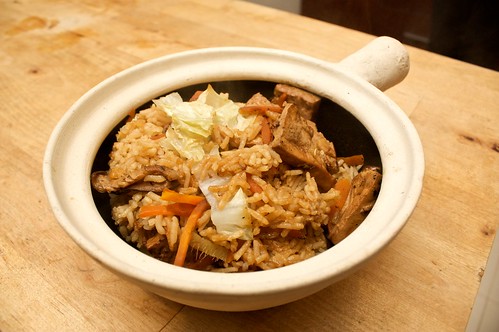
claypot tofu rice

claypot tofu rice

Claypot rice is often garnished with spring onions, but I use them so rarely it seemed a waste to buy an entire bushel just for this one dish. If you don't have a claypot, you can use a pot with a tight lid, or a rice cooker.

ingredients
1 cake firm tofu
2 cups rice
2 tbl dark soy sauce
2 tbl light soy sauce
2 tbl vegetarian oyster sauce
1 hunk of ginger (fresh ginger is essential to this dish)
half a teaspoon of caster sugar
pepper
quarter tsp of powdered stock
half a dozen dried mushroom pieces
a handful of wombok/chinese cabbage leaves (thickly sliced)
some carrot (julienned)

method
Combine one tablespoon of dark soy, one tablespoon of light soy, and two tablespoons of oyster sauce, with half a teaspoon of castor sugar, a shake of ground pepper, and a quarter of a tablespoon of powdered stock. Into this marinade add about a centimetre of ginger, crushed. Combine well, until things which are powdered have dissolved. Slice up the tofu into chunks of about ten cm in length, and cover in marinade. Allow to marinate for half an hour to an hour.

Soak the mushrooms in hot water for twenty minutes.

After the mushrooms have soaked, it is time to prepare the rice! Rinse the rice. Then add two cups of water, plus a teaspoon of dark soy, a teaspoon of light soy, a shake of pepper, and a shake of sesame oil. Julienne some ginger finely, and add this as well. Start to cook, lid on.

In the meantime, lightly fry the tofu in a little peanut oil. Be sure to fry both sides. Drain the mushrooms, and add this, then add the carrots for another half a minute. The carrot won't be cooked, but that's okay at this point.

After the rice has been cooking for about seven or eight minutes, it should have just started looking 'dry.' Throw the tofu, mushrooms, carrots, and cabbage on the top, then put the lid back on and keep cooking for another fifteen minutes. After the rice is cooked right through, leave to sit, still with the lid on, for another twenty minutes. This will give the flavours a chance to seep in.

Serve in the claypot, if you've prepared it that way, or in bowls.


This is a submission for the It's a Vegan World: Malaysian blogging event. How could I resist blogging about Malaysia? (ans: I could not)
Monday, 29 June 2009

roasted pumpkin and mushroom risotto

We had a whole butternut sitting in the bottom drawer, and half a bag of mushrooms, so rather than venture outside in the horrible weather to get provisions, I decided to make a pumpkin and mushroom risotto - but not just any pumpkin and mushroom risotto. This delicious, creamy, flavoursome risotto was comprised of roasted pumpkin and roasted mushrooms. Roasting them before adding them to the risotto added an amazing flavour to the risotto, and filled the kitchen with the smell of roasting pumpkin.

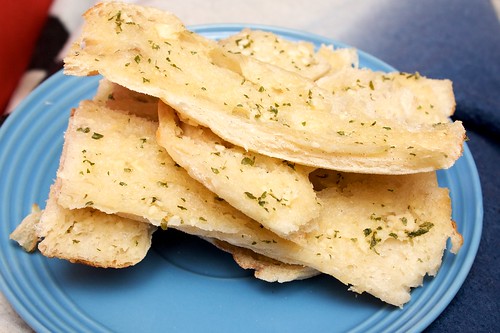
I served this with some garlic bread. It was quite perfectly timed, I put the garlic bread in at the same time as adding the pumpkin and mushroom to the rice, and pulled it out just as the risotto was ready. I used some left over turkish bread for this, sliced thinly into fingers and funny shapes and baked for about fifteen to twenty minutes.

roasted pumpkin and mushroom risotto

roast pumpkin and mushroom risotto

ingredients
one butternut pumpkin
two handfuls of mushrooms (i used a mixture of portobello and button)
quarter of a red onion, diced evenly
tablespoon of oregano
shake or three of rosemary
half a tablespoon of parsley
one clove garlic (minced)
2 cups arborio rice
five cups of vegetable stock
half a cup of white wine
salt + pepper
shake of nutmeg
three shakes of ground sage

method
Cut butternut pumpkin in half lengthways. Lightly oil a baking tray with olive oil, and place pumpkin cut side down. Roast at 175C for about forty-five minutes. In the meantime, pat down the mushrooms. After thirty minutes of roasting, pull the pumpkin out, and add the mushrooms to the tray. You can remove the stalks (this is my preference), and throw them into the tray also. Drizzle mushrooms lightly with olive oil, and sprinkle with dried oregano. Put tray back into the oven, and continue baking for remaining pumpkin time.

After returning the pumpkin and mushroom to the oven, heat some oil in a pot, and add the red onion. Fry with oregano, rosemary and parsley until the onion starts to soften, then add the garlic. Stir through, and add in the arborio rice and a cup of stock. Stir continuously, adding more stock and the wine, as necessary.

When the pumpkin is ready, remove from oven. Remove the skin from the pumpkin immediately, roughly chop the mushrooms into large chunks, and add all, including the liquid in the tray, into the risotto. Also add the salt, pepper, nutmeg and sage.

Allow all the stock to soak into the rice, and continue stirring, for about another fifteen minutes, or until the rice is done deliciously.

garlic bread

Thursday, 28 May 2009

ba cheng for duan wu

I’ve grown up calling a lot of things by a lot of different names. I say yao chao guai, but I also say you cha kuih, and most often I say 'crunchy stuff.' There was that time in the car when we kept talking about gula, and try as we might we couldn’t remember what it was in English. This mixing of words comes from being from Penang, where the town is quite Hokkien but my family is Cantonese and of course it’s in Malaysia and most people speak English.

dragon boating in darling harbour

Today is Duan Wu Jie, or the Rice Dumpling Festival, or the Dragon Boat Festival, or 端午节, or double fifth. On Duan Wu Jie, we make ba cheng, tie it up and hang it up, and then throw them in the river. I buy my ba cheng, and I eat it all up, no river-throwing for me (but also no dragon boats). The idea is to ward off bad health and things, and it’s either a commemoration of this old advisor, whose body was protected from fishes by zong zi in the water, and by the rowing and beating of drums, or it is part of the Madame White Snake mythology.

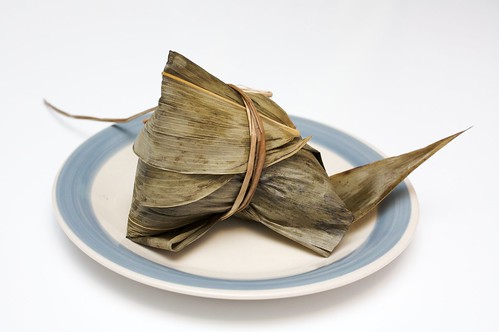
Ba cheng is also zong zi, it’s usually wrapped in lotus leaf but a variation for us heathen South-East Asians is banana leaf or pandan leaf. Ba cheng is glutinous rice with a tasty filling, mushrooms or chestnuts or red bean paste or an assortment of things. My favourite filling is mushrooms, chestnuts and fake chicken, a hold over I suppose from my childhood when my favourite filling was chestnuts and chicken (I like mushrooms a lot more now than I did then).

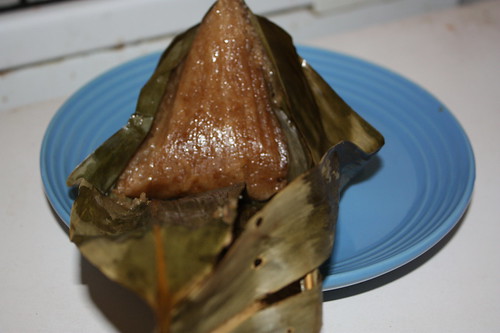
ba cheng

These ba cheng this year are from Lotus, I steamed them in the leaves for ten minutes before unwrapping and nomming.

Wednesday, 8 April 2009

char siu rice of deliciousness at home

I know I only recently said that I try not to eat mock meat too often, yet here I am, again posting about fake meat!

char siu fun

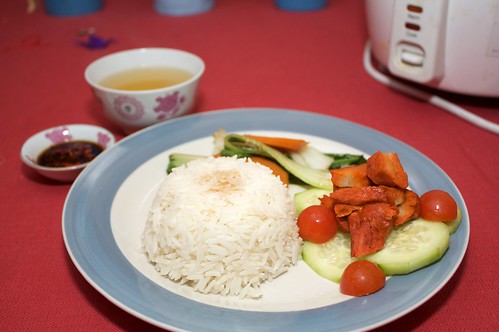
Char siu rice is simple Chinese cooking, fast and easy and tasty. I've served it here with soup, bok choy and carrots in a garlic soy sauce, and on a bed of cucumber and tomatoes. The little bowl is chilli and soy sauce, a spicy but delicious condiment. I've never made char siu rice on my own before, so it was a bit exciting to serve this childhood favourite. Super tasty!

The important thing with char siu rice is to make sure the rice is cooked with stock, not water. A centimetre or two worth of fresh ginger, shredded, should also be added to the rice whilst it is cooking. This adds a really excellent flavour to the rice. Don't serve the char siu on its own, it is best to be plated with cucumber, or tomatoes.

My favourite thing about char siu rice is scooping out the soup and pouring it, one spoon at a time, over the rice.

Char Siu Rice

rice ingredients
2 cups of rice
2 cups of soup
1 cm ginger, shredded

cheatery soup ingredients
5 cups of water
half a carrot (diced)
1 bok choy stem (or celery stem) chopped roughly
2 tsp vege stock powder
salt and pepper
a little ginger (minced)
a dash of light soy sauce

method
To make the soup, bring the water to a boil, add the remaining ingredients. Reduce to simmer with the lid on for half an hour. Remove bok choy and carrot, remove from heat.
To make the rice, mix two cups of the soup with two cups of rice, add the ginger and leave to cook for the usual time.

Prepare the char siu (oven or microwave to heat/defrost), and plate.

Monday, 29 December 2008

sundried tomato, olive, mushroom and artichoke risotto

On Saturday, having not cooked a meal in several days, I found myself with very little food in the house and a need to cook dinner before we headed out for a going away party. As a result, I threw together a risotto made mostly from things in jars, and it's good to know that I can pull together something that's relatively quick and very tasty even when I think I've got nothing in the house.

I had a handful of mushrooms that were getting a bit old and tough, so I prepared them slightly differently from what I would usually do. I fried them for a little, with the onion and the garlic, and then added a little bit of stock to let the mushrooms soften a little, before adding the rice and the rest of the ingredients.

sun-dried tomato, olive, mushroom and artichoke risotto

sundried tomato, mushroom, artichoke and olive risotto

ingredients
one half brown onion (diced)
1 clove garlic (minced or diced finely)
half a dozen mushrooms (sliced)
1 tomato (diced)
half a cup of sundried tomatoes
some artichoke hearts
handful of olives
2 cups arborio rice
½ cup red wine
5 cups of stock


method
In a little (vegan) margarine, fry the onion. As it begins to turn golden, add mushrooms and garlic, and a little of the oil from the sundried tomatoes. Continue to fry until the mushrooms begin to release their liquid. Add a small amount of stock, simmer for a minute, then add the fresh tomato and the arborio rice. Cover the rice in the mixture in the pot. On low to medium heat, slowly add the wine and the stock, one cup at a time, and stir the rice as needed. Keep adding stock until the rice looks almost done. More stock may be required, or more wine. This will take about twenty minutes to half an hour.

Add the sundried tomatoes, olives and artichoke hearts. Continue adding stock as necessary, and stirring, until the rice is soft (hopefully about six or seven minutes). Allow all the liquid to soak in to the rice.

Thursday, 30 October 2008

sushi

I went to a sushi party once in first year uni, but I hated vinegar so my friends made the rice with no vinegar. The sushi was pretty average, and I didn’t bother trying sushi again. About a year after I had been vegetarian (and shortly before I went vegan), I was at an event and thought I’d give the sushi a go. It was amazing, and I have been obsessed with it since. It makes a fantastic “I have no leftovers! What shall I take to work?” sort of lunch, and makes a pretty good change from sandwiches (which can also be pretty awesome).

sushi

sushi

Aside from obvious things, you will need a bamboo sushi mat. You can buy this in your local Asian supermarket (or even in most Woolies/Coles). Metal spoons can apparently change the flavour of the rice, I can’t verify this as I use wooden spoons but I have heard the metal reacts with the vinegar or the mirin. So that’s your myth to consider, if you so wish.

ingredients
two or three nori sheets
one cup of sushi rice
two tablespoons rice wine vinegar
one tablespoon mirin
1½ cups of water
some combination of three of the following:
quarter capsicum
half a large carrot
half a dozen snow peas
large handful of bean sprouts
half an avocado
ten cm length of cucumber
alfalfa

method
Bring the rice and water to a boil, stirring, then reduce to really low, and simmer for ten or twelve minutes with the lid on. Prepare the veggies: julienne carrots, snow peas, capsicum, and cucumber. I like to slice the avocado width-ways, and take the tails off the bean sprouts.

When the rice is soft and cooked, remove from heat. Stir the vinegar and mirin through, and cool. I like to do this with a paper fan whilst stirring, but if you’re feeling lazy you can just leave it to cool in the air.

Place a nori sheet on the bamboo mat with the slats running horizontally. Make sure you have it on the right side, or you won’t be able to roll. This should be the side closest to you. Keeping the nori right up against the edge of the bamboo mat, spread about a third of the rice in a thin layer across about one half to one third of the nori on the side closest to you. Then lay out the filling across no more than the bottom half of the rice (ie, closest to you).

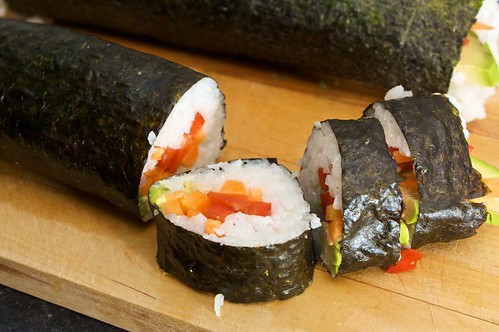
Moisten your hands (I usually have a small bowl with a little water in it handy) and firmly roll the bamboo mat. The nori will roll within the sheet. This is much easier than rolling without. There shouldn’t be any seaweed swirl going on, if the proportions are right it should just roll together without a swirl. As you can see from these photos, I misjudged the ratio of rice to filling just slightly, so resulting the opposite problem to swirl, which is filling nestled next to the nori.

This amount will usually make about two or three rolls, depending on how fat with rice you like your sushi. Of course it is not necessary to strictly stick to these fillers and proportions, I have just provided them to give some idea of amounts.

I want to try the five spice tempeh as a filler, I think it will be excellent with some avocado and bean sprouts.

Sunday, 19 October 2008

nasi goreng - modifications

nasi goreng

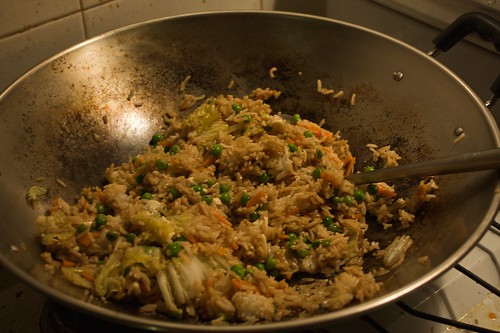
I don't eat nasi goreng anywhere near as often as I would like to, because we usually eat up all the rice before it becomes old enough to goreng. Had it recently, though, because I knew I'd be home late the next day so I cooked an extra two cups to ensure nasi goreng the next day! I am so pleased with myself, I think I'll be using this trick more often.

I got home from my German class to find D in the kitchen prepping the vegies, and there was a sanitarium vegie hot dog on the chopping board, it having been sliced into tiny circles. It was an interesting variation, it added a not-unwelcome hotdog flavour, though it is probably not a variation we'll add very often. Other variations of recent: diced eggplant, slices of tempeh.

Speaking of tempeh, I made five-spice tempeh and it was just like I remembered from our five-spice chicken days, so much so that D accidentally said, "I'm going to get more chicken." Recipe eventually, but no photos yet so you'll have to wait.

You can find my standard nasi goreng recipe here.

Monday, 1 September 2008

wandering around penang

rice and garlic choy sum


I've been away from keyboard for the last two weeks because I had to take an unplanned run up to Penang. I spent a lot of time loitering around Prangin Mall as I was staying at the Traders Hotel on Jalan Magazine. There aren't any vegetarian restaurants in there, but that's okay, because my favourite kitchen implement is the wok, and the tasty dishes that come out of it, ie, mee goreng, char kuay teow, etc, are my favourites. And that's easy to veganise, though most times it helps to speak Hokkien, Cantonese or Malay, because sometimes you have to do a fair amount of alteration.


char mee


The other thing I love, is that saying "vegetarian" leads to "do you eat egg? what about garlic?" and oh, I wish restaurants in Perth could be more accepting of that.*


nasi goreng


I know the photos all look a bit same-same, and terribly poor quality due to being taken using Toy Camera (an Ixus 55), but oh how I love these foods, and how I miss them when I am not in Malaysia.


*they are not saying 'vegetarians don't eat garlic,' they are checking that I am not Jain or have some other (religious) restrictions.

pad thai

breakfast mee

Friday, 15 August 2008

pumpkin and leek risotto

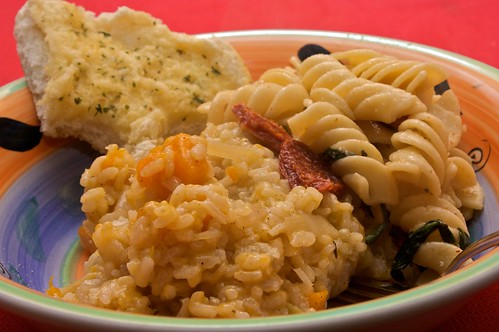
D’s youngest brother came to dinner last night. Since their parents have been away, all he’s been eating is frozen dinners and takeout, because the only thing he claims to be able to cook is enchiladas, and he has run out of corn tortillas. Unfortunately, he hates mushrooms, so at the last minute I had to revise my original dinner plan and replace it with a pumpkin and leek risotto, which I served with a spinach and sundried tomato pasta salad, and garlic bread.

dinner


I don’t know how N felt about it all, but I’m really happy with how the risotto turned out.


pumpkin and leek risotto

Boiling the pumpkin and then frying in a frypan makes the pumpkin soft but crispy. This is also an awesome way to prepare pumpkin for pizzas. If your preference is for roasting instead, feel free, but it will add a little bit to the overall cooking time.

ingredients
one pumpkin (in small cubes)
sage
a shake or three of ground nutmeg
pinch of thyme
two cups arborio rice
five cups stock
half red onion
one leek (white part only)
one clove garlic (minced)


method

Boil the pumpkin until almost cooked, then fry in a fry pan for five or six minutes.

Dice the onion, and in a heavy bottomed pot sauté for about ten minutes, or until caramelised. Cut the leek into lengths of about five centimetres by five millimetres, and add the leek and garlic to the pot. Saute, add the rice, sage, thyme and nutmeg. Stir the onion mixture through the rice until covered, then add a cup of stock. Continue stirring the rice, allowing the stock to soak in before adding another cup.

I think fresh sage would be awesome with this, but I didn’t have any so I used ground, about a teaspoon worth. The amount used may vary.

After ten minutes, or about two cups, add the pumpkin to the rice. Continue to add the stock until the rice is soft, but with a slight resistance when bitten.

Wednesday, 11 June 2008

easy biryani

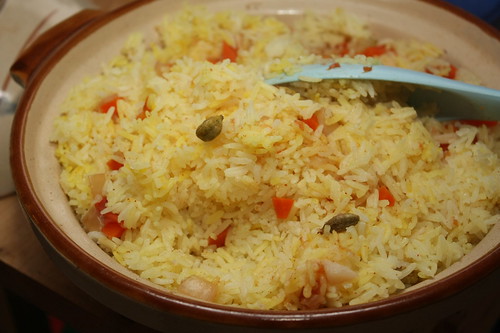
biryani

I love this biryani, it's so simple and tasty and I walked down the road with a pot of it to serve to my friends, and it was perfect for a cold evening.

biryani

ingredients:
1 clove garlic (minced)
1 (or only 1/2) brown onion (sliced)
2 tsp garamasala (see note)
1 diced tomato
1 potato (diced small)
1 carrot (diced small)
1/2 cup water
capsicum (diced)

1 1/2 cups rice
cardamom
1/2 tsp chilli flakes or powder
1/4 tsp tumeric

method:

Fry the garlic and the onion until the onion is golden and soft, about five minutes. Add garamasala. Stir in tomatoes, potato, carrot and water, bring to a boil. Reduce heat and simmer covered for about ten minutes. Add capsicum and any other vegetables as appropriate. Zucchini and broccoli are also very good in this.

Cook rice and spices separately, in usual fashion.

Combine the two together. I like to layer half the rice, then the vegetables, then the rest of the rice, but it's also nice to mix it all up.

I like to serve this with a rasam or a curry with a tomato-base.

NOTE: Often store bought garamasala is not gluten-free. To that end, I usually make my own garamasala, although I do also always have a jar of store-bought stuff on hand, for when I'm feeling lazy and not feeding coeliacs. Garamasala how-to will follow eventually.

ba cheng

ba cheng

A visit to my mum's favourite Chinese supermarket (Kong's Supermarket up the top of William Street in Northbridge) would often see us wandering home with yao chao gwai and these, sticky, savoury rice wrapped in lotus leaves. I've been eating them my whole life, watching my mother steam them and carefully unwrapping the leaves, but it wasn't until last week that I thought to ask what they were called. It's funny, the patterns we learn, and the habits into which we fall. I never needed to know what they were called until I wanted to blog about them and realised I couldn't call them by name.

We had dinner at Lotus about a week ago, and the proprietor waved her hand at the box. "Take for your mum," she insisted, so I took one for me and one for my mum, and turned to D. "Don't even talk to me about food," was the response, so I didn't.

Later, D protested that I'd not picked one up for each of us, so alas, I was compelled to share.

This ba cheng contained delicious sticky rice and a whole lot of mushrooms and it was great. I hope to try my hand at making the ba cheng sometime soon, but for now I am happy to settle for buying them and bringing them home. They take about ten minutes to cook, you can steam them in bamboo or in a steamer but do it on the stove, not in the microwave.

Sunday, 18 May 2008

nasi goreng

This is one of those simple home foods that brings me such delight. It's great for breakfast and makes a really easy dinner, and you can usually just use up leftovers (rice and random vegies and things) and if you've got a bit of curry, that's great to go on the side, too.

nasi goreng

Nasi Goreng

The secret to a good nasi goreng is a hot wok and a flat metal wok spatula (it looks like this) and everything being prepared and ready to go. Nothing worse than half your ingredients in the wok and realising you've left something on the bench, and you've forgotten to chop it.

ingredients:
pre-cooked (and cooled) rice (two or three cups worth is a nice amount)
a carrot (julienned)
cup of peas
quarter of a head of chinese cabbage, chopped
tablespoon of dark soy
tablespoon of light soy
50g or so of soft tofu, chopped loosely

method:

If you're using frozen peas, prepare them in advance by adding them to some warm water. This unfreezes them, it's essential that they're soft and warm-ish (or at least not frozen) when you're using them.

Add a dash or three of oil (preferably peanut) to the wok. Swirl it around until the oil is thinly coating the wok base and sides. Add the carrots, fry until soft. Use the wok spatula to toss the carrots occasionally. After the carrots begin to soften, add the cabbage and a dash or two of water. This will allow the cabbage to steam slightly. After the cabbage begins to wilt, and the water has evaporated, add the rice. Pour the soy into the rice, and break the rice up using the spatula. Drain the peas and add. Toss the rice into the other ingredients. Your rice will have clumped as it cooled or was stored, so you will have to press the clumps down with the underside of the spatula. Toss and press until the rice has taken in all of the soy. You may require more or less soy, depending on your taste and the amount of rice you have used.

At the last, add the tofu, mix it in and let it break up. It gives a gooey sort of consistency, a bit like adding egg traditionally does, and is a great, though optional, addition to the nasi goreng.

The tofu and the mixture of vegetables are just what you have handy, but are usually peas, carrots, Chinese cabbage and corn kernels, which I tend to omit because D dislikes them so.