Dear readers of my blog, presumably mostly in Australia (I really should install some sort of tracker); I am pretty sure you don't know some of the animal things going on in China at the moment, so I have decided to share with you some of the stories I have been following in the last week! Maybe I will even attempt to do this regularly. Let me know if reading this interests you!
Protests in Shenzhen against the extraction of bile from live bears:Activists Protest Guizhengtang’s Live Extraction of Bear Bile. (not gonna lie, I'm looking for a new face mask and the ones the activists are wearing bear one might be it!)
In Panjin, it is super common for seals to be brought in to hang out for the rest of their lives in a little pool inside a restaurant. The pool is so tiny I would not want to sit in it! (I have certain Body of Water preferences, and I suspect so do seals). Netizens rally to aid of captive seals
In Chongching, hundreds of dogs were rescued but now they have nowhere to go! Dogged by misfortune (I see what you did there).
Another pun: To bee or not to bee. China's native bees are disappearing, due to a) encroachment by exotic bees, and b) environmental degradation. Story of everything, Y/N?
Beijing has a feral cat problem. I know it because I walk past at least two colonies on my way to work, one right beside my house and one inside the grounds of my work (which is a park with a temple! and a feral cat colony). Beijing's Feral Cat Problem Comes Back
Showing posts with label animal stuff. Show all posts
Showing posts with label animal stuff. Show all posts
Friday, 2 March 2012

Wednesday, 9 February 2011
some links about animals and food politics and things
unexpectedly a lot of links
Pets petrified in cyclone crisis
Cassowaries are getting help after the cyclone!
Animals in Brazil Suffering After Disastrous Floods
10 Horrifying Stories of Factory Farming Gone Wrong, a pretty gross slideshow (USA-centric)
Sled dogs massacred after Canada Winter Olympics - business dropped off after the Olympics, so the huskies that were brought up specifically for the Olympics were then killed.
In other 'why are humans so crappy' news: Cockfighting bird stabs California man, Jose Luis Ochoa, to death: police. Specifically, cockfighting: why do it?
Back in Australia, an article on the ABC where the risks for jumps jockeys are identified. So if when you're arguing against jumps you find that people don't care about the horses, try this argument instead.
An op ed at the Herald Sun on a new proposal around disposal of young calves.
Where climate and conservation collide
The Face of Exploitation by s.e. smith at This Ain't Livin', on the human exploitation elements of food (both animal and vegetable).
I link to Treehugger way too much, but: Chinese Activists Call Canada Racist For Selling Seal Meat because Canada has sold seal meat to China (perhaps) on the assumption that those Chinese will eat anything.
This is not vego-specific (though our catastrophe's addition at the end is), but how to shop when you are poor is a good post.
at the smh: Wasteland: the $7.8b of food Aussies throw away .
I failed to post about this before call for papers closed, but the 4th Annual Australian Animal Studies Group Conference is being held 10 - 13 July at Griffith Uni in Brisbane.
Potluck #1 is up! Announcement for #2 is coming soon.
Pets petrified in cyclone crisis
Pets were not allowed in the cyclone evacuation centres, while farm animals were in paddocks when Yasi hit.and No-pet evacuation rules 'putting lives at risk'
RSPCA spokesman Michael Beatty says there have been plenty of bird deaths as well as reports of animals wandering the streets.
Cassowaries are getting help after the cyclone!
Animals in Brazil Suffering After Disastrous Floods
10 Horrifying Stories of Factory Farming Gone Wrong, a pretty gross slideshow (USA-centric)
Sled dogs massacred after Canada Winter Olympics - business dropped off after the Olympics, so the huskies that were brought up specifically for the Olympics were then killed.
In other 'why are humans so crappy' news: Cockfighting bird stabs California man, Jose Luis Ochoa, to death: police. Specifically, cockfighting: why do it?
Back in Australia, an article on the ABC where the risks for jumps jockeys are identified. So if when you're arguing against jumps you find that people don't care about the horses, try this argument instead.
An op ed at the Herald Sun on a new proposal around disposal of young calves.
Where climate and conservation collide
At the state's largest wind farm at Woolnorth in the island's north-west, 19 wedge-tailed eagles are known to have been killed since it began operations in 2003. Another three sea eagles also have hit the rotors.At Vegans of Color: How NOT to Inspire More People to Go Vegan, on an awareness graphic.
The Face of Exploitation by s.e. smith at This Ain't Livin', on the human exploitation elements of food (both animal and vegetable).
I link to Treehugger way too much, but: Chinese Activists Call Canada Racist For Selling Seal Meat because Canada has sold seal meat to China (perhaps) on the assumption that those Chinese will eat anything.
This is not vego-specific (though our catastrophe's addition at the end is), but how to shop when you are poor is a good post.
at the smh: Wasteland: the $7.8b of food Aussies throw away .
I failed to post about this before call for papers closed, but the 4th Annual Australian Animal Studies Group Conference is being held 10 - 13 July at Griffith Uni in Brisbane.
Potluck #1 is up! Announcement for #2 is coming soon.
Thursday, 4 November 2010
[book review] thanking the monkey
I came to Thanking the Monkey with some skepticism. Karen Dawn was recently in Melbourne giving a talk as a fundraiser for Edgar's Mission, and at the last minute I decided to go, prompted by some enthusiasm from J. I liked the talk well enough; I wasn't blown away by it, but I decided to pick up a copy anyway (all the profits for the copies sold on the night went to Edgar's Mission, too!).
I like to think I know a lot about animal issues, but some of the stuff I was reading totally astounded me. I had to start bookmarking, and now my copy is filled with post it notes and little sticky bits (which I'm going to remove as I type this, so I can lend the book out).
Dawn has an interesting, conversational writing style. She talks up her book as an accessible gift book, and certainly it is very accessible. The book is illustrated with pictures and comics, on the premise that even if you give the book to someone who can't bring themselves to read it, they might flip through and see some of the comics, and take away at least a part of the message.
Thanking the Monkey was written as an all-around animal rights book: at some times it's an introduction, covering the basics, and at other times it's quite in depth and confronting.
 There are lots of suggestions of other books to read, as well as video and other online links. The book is heavily (though inconsistently) referenced, which I always enjoy. It's also very easy to pick up and put down, as it's filled with lots of separate sections. This means I felt comfortable putting it down for a week and a half and then coming back to it again.
The chapters are set out in a nice way, too: there's an introductory chapter, one on pets, animal entertainment, clothing, as food, animal testing, green/conservation groups, and 'compassion in action.'
One big thing for me was that, it led to me revising my opinion on zoos. I've always struggled with zoos, not liking the voyeristic/trapped components of it for animals, but recognising the need for conservation. Halfway through the section on zoos, I changed my mind. I'm still there for the conservation efforts, but why do we need zoos to fit in to urban areas? Anyway, me and zoos are definitely over.
The book does have some problems. Like many vegan / animal rights texts, there's some fatphobia. At some points there's an undertone of cultural cluelessness. There's also a sort of something, for certain people. "And some human mothers will hand over a baby for a vial of crack," (pg 254) for example, is a statement that I would like to challenge. The book frequently uses terms like 'normal,' which regular readers of this blog will know I dislike, as it positions some of us as not-normal.
However, I learnt a lot of things that I didn't know. I don't know if it was naiveness or overlooking or what, but as the book went on I was blown away by how much I was bookmarking. A small sampling:
One final benefit of reading the book, for me, was being able to quote from it for my recent talk at the Animals Australia Forum. I gave a talk on intersectionality, and I had wanted to give examples of why intersectionality is needed in AR. Advised against this, I went the other way: I used Dawn's 2005 article ' Best Friends Need Shelter Too,' reproduced in the book, as an example of how intersectionality takes things in to account. So that was nice.
I recommend the book. It's an interesting read, and I learnt a lot, but I recommend reading it with caution. I'm not sure I would give it as a gift book to people who weren't already interested in AR/AW.
I like to think I know a lot about animal issues, but some of the stuff I was reading totally astounded me. I had to start bookmarking, and now my copy is filled with post it notes and little sticky bits (which I'm going to remove as I type this, so I can lend the book out).
Dawn has an interesting, conversational writing style. She talks up her book as an accessible gift book, and certainly it is very accessible. The book is illustrated with pictures and comics, on the premise that even if you give the book to someone who can't bring themselves to read it, they might flip through and see some of the comics, and take away at least a part of the message.
Thanking the Monkey was written as an all-around animal rights book: at some times it's an introduction, covering the basics, and at other times it's quite in depth and confronting.
 There are lots of suggestions of other books to read, as well as video and other online links. The book is heavily (though inconsistently) referenced, which I always enjoy. It's also very easy to pick up and put down, as it's filled with lots of separate sections. This means I felt comfortable putting it down for a week and a half and then coming back to it again.
 The chapters are set out in a nice way, too: there's an introductory chapter, one on pets, animal entertainment, clothing, as food, animal testing, green/conservation groups, and 'compassion in action.'
One big thing for me was that, it led to me revising my opinion on zoos. I've always struggled with zoos, not liking the voyeristic/trapped components of it for animals, but recognising the need for conservation. Halfway through the section on zoos, I changed my mind. I'm still there for the conservation efforts, but why do we need zoos to fit in to urban areas? Anyway, me and zoos are definitely over.
The book does have some problems. Like many vegan / animal rights texts, there's some fatphobia. At some points there's an undertone of cultural cluelessness. There's also a sort of something, for certain people. "And some human mothers will hand over a baby for a vial of crack," (pg 254) for example, is a statement that I would like to challenge. The book frequently uses terms like 'normal,' which regular readers of this blog will know I dislike, as it positions some of us as not-normal.
However, I learnt a lot of things that I didn't know. I don't know if it was naiveness or overlooking or what, but as the book went on I was blown away by how much I was bookmarking. A small sampling:
- "...unlike other mammals, dolphins are not automatic breathers; every breath is a conscious choice, and when life becomes unbearable they can choose to take no more. They commit suicide. He says that much of the early mortality rate of dolphins in captivity is a result of suicide: "We literally bore them to death."" (pg 84)
- There's type of fur (from lambs - not sure why it's not wool), where the baby lambs are killed at a few days of age, and sometimes even the skin of unborn lambs is used. I'm not sure why unborn lambs horrifies me more than born lambs - maybe because the mother has to be killed too? (pg 107) In the USA (not sure if this extends beyond the USA) coats with less than $150 worth of fur don't have to be labelled as having fur (pg 110).
- Farmed salmon requires about 2.5 times the same amount of wild fish as food.
- The WWF, as a conservation society, sometimes positions itself squarely against animal rights (pg 295) - this was cool to read because then, when I was talking to the Wilderness Society people at World Vegan Day, I was able to ask so many questions I'd never previously have considered.
One final benefit of reading the book, for me, was being able to quote from it for my recent talk at the Animals Australia Forum. I gave a talk on intersectionality, and I had wanted to give examples of why intersectionality is needed in AR. Advised against this, I went the other way: I used Dawn's 2005 article ' Best Friends Need Shelter Too,' reproduced in the book, as an example of how intersectionality takes things in to account. So that was nice.
I recommend the book. It's an interesting read, and I learnt a lot, but I recommend reading it with caution. I'm not sure I would give it as a gift book to people who weren't already interested in AR/AW.
Tuesday, 2 November 2010
ooh it's melbourne cup day
one of my least favourite holidays. at least now that i'm in melbourne, and it's a public holiday, i don't have to find excuses to not go to work / not join in the "celebrations" (i used to hide in my office whilst everyone else ate chicken and watched the race).
instead of making a bet on the cup, maybe you could make some sort of appropriate donation, or sign the pledge to never bet on cruelty.
at the punch, ward has written about the brutal truth about the horse racing industry; and up at vegaroo, sharon has a list of other alternatives you can do today (including options for cities other than melbourne). there's a protest picnic near flemington (with free mr nice guy vegan cupcakes!).
or you could post one of these links on your facebook wall, and see if it starts a verbal fisticuffs, like it already has for some people. :o)
instead of making a bet on the cup, maybe you could make some sort of appropriate donation, or sign the pledge to never bet on cruelty.
at the punch, ward has written about the brutal truth about the horse racing industry; and up at vegaroo, sharon has a list of other alternatives you can do today (including options for cities other than melbourne). there's a protest picnic near flemington (with free mr nice guy vegan cupcakes!).
or you could post one of these links on your facebook wall, and see if it starts a verbal fisticuffs, like it already has for some people. :o)
Friday, 4 June 2010
miscellaneous links
I don't know anything about this ad campaign (because I...don't watch TV in Europe...), but I still am horrified by what is going on here. A report at the Daily Mail: Meerkat misery: Thanks to that TV ad, they're now a must-have pet…but behind the cute image lies a shocking cruelty. This is an article about meerkats becoming pets, being kept as single meerkats, in small cages, all sorts of horrible care issues.
Food labels not battleground for animal welfare
Animal lovers can have a say - what a great title, for a situation that is about a minster declaring it fate for animals to be tested on:
About dairy milk: World Milk Day or Weapon of Mass Destruction?
Apparently there has been a lot of coverup as to how many animals have died due to the BP oil spill: Dying, dead marine wildlife paint dark, morbid picture of Gulf Coast following oil spill
Food labels not battleground for animal welfare
Animal lovers can have a say - what a great title, for a situation that is about a minster declaring it fate for animals to be tested on:
Mohd Ali had on May 28, during a meeting with his Facebook friends at The Curve, Kuala Lumpur, said God created animals to be used by humans, including to be eaten and animals needed to be sacrificed in order to find vaccines and cure for diseases.Miss T has a post up about Animal Justice Party of Australia.
About dairy milk: World Milk Day or Weapon of Mass Destruction?
On WMD, let's remember the 1 million bobby calves who were taken from their grieving Mums, only to be slaughtered as 'waste products' of the dairy industry -- so that the milk nature intended for them could be fed to humans...At the Guardian, an article: UN urges global move to meat and dairy-free diet
On WMD, let's spare a thought for the struggling Murray Darling Basin. It takes 200 litres of water to get one glass of milk. Not only is this the driest inhabited continent in the world -- our river systems are at record lows. But I'm taking shorter showers while the dairy industry is draining our waterways
Apparently there has been a lot of coverup as to how many animals have died due to the BP oil spill: Dying, dead marine wildlife paint dark, morbid picture of Gulf Coast following oil spill
Monday, 24 May 2010
hear me roar: a forum to consider the parallels and intersections between equal rights and animal rights and society and law (a talk)
Last week I attended a lecture at Victoria University, organised by Lawyers for Animals and Victorian Women Lawyers. Entitled 'Hear Me Roar: A forum to consider the parallels and intersections between equal rights and animal rights in society and law,' I was interested but cautious. The speakers were Moira Rayner ('Freelance writer, lawyer, academic and Executive Member, Lawyers for Animals') and Dr Siobhan O'Sullivan ('Research fellow, School of Social and Political Sciences, University of Melbourne; Member, Oxford Centre for Animal Ethics; and Member, Secretariat of Barristers' Animal Welfare Panel').
O'Sullivan spoke to the topic 'Animal Invisibility and Animal Suffering: what can feminism and refugee rights teach us about insidious animal suffering?' I am always cautious about talks/topics that seek to compare one issue to another, just because this so often results in the further marginalisation of one of those groups, or some form of oppression olympics (or, my favourite, 'XX is the last acceptable oppression.'). Appropriation is also often a big part of it. Anyway, that's why I was cautious but interested going in.
O'Sullivan highlighted the way, in the animal protection movement, it is often women who do the work, but men who right books and speak. She noted Adams as an exception to this,* and as someone who drew the link between commodities.
Animals as commodities, women as commodities. This is part of the idea of public and private, and why she uses the term 'invisible suffering.' This is where women's and refugee rights come in to it - these two groups have previously had to deal with invisible suffering.
She also talked about liberal democracy, and how it works on a group functionality - therefore as an individual it is problematic to complain.
The idea of the public/private divide can be seen in how laws around animals have progressed: the first laws were for beasts of burden, because these were the animals on the street, these were the animals one could see abused. It was not for many years afterwards until laws were extended to companion animals, and O'Sullivan's contention is that this is because companion animals were in private.
She points out that there is a similar ish problem in refugee rights - it is very difficult to hear refugees speak, and it can be very difficult to gain access to refugees and see/'believe' their treatment, as they are housed away from the mainstream community. Do they really need to be housed away from the community, on Christmas Island? Or is it just so that we can't see them, and therefore can't understand what's going on?
Rayner spoke without a powerpoint (!!), and talked less about the idea of gender and more about the idea of power. She emphasised that Australians are very uncomfortable with talk about rights unless it is in regard to self rights. Rayner took a very large over-reaching approach, talking about many countries around the world, and many issues, especially regarding dependency relationships (such as children, animals, disabled persons), and linked these relationships all to power. She also included a bit of a rights history, talking about how the giving of rights was first to animals, then to children, and then to women, and then to racism and religious persecution.
Rayner circled around with some action points for animal rights activism, that have clearly drawn from other forms of rights activism, and also that I think can be a good reminder in other forms of rights activism:
My concerns regarding appropriation and eyebrow raising were not unfounded but there were no sirens going off, and my notes only include three uses of the red pen, which was good. This is mostly, though, because it was a lot about what feminism can do for animal rights/the lessons learned, rather than anything else.
In many ways it was clear that this talk was to a generalised, nebulous feminist/ medium-engagement woman (the white, middle-class, western-world sort), and kind of a low-level discussion (nothing too heavy or controversial, unless you think animal rights are controversial) but the discussions of intersectionality and links between oppressions were at least there, which I always appreciate.
There are some things I would have liked to see discussed, or things that could be discussed subsequently. I would have liked to talk more about the intersections - there was some talk about domestic abuse, and I thought that the points about public/private were very interesting, but I would have liked to talk about the intersections more. I definitely want to talk more about power and how that translates to a lack of power and privilege for certain groups. I would also like to talk about the economic and cultural assumptions surrounding a lot of the talk of animal rights - I know we were talking from an Australian legal basis, but there were lots of examples from other countries and they were all of a certain type of culture and yes.
Flowing on from that, and unrelated to animal rights, I want to talk about the racism in refugee rights and how that relates to the public/private, but that is for another time. :o)
*please note that I have issues with Adams, which are touched on here and here.
O'Sullivan spoke to the topic 'Animal Invisibility and Animal Suffering: what can feminism and refugee rights teach us about insidious animal suffering?' I am always cautious about talks/topics that seek to compare one issue to another, just because this so often results in the further marginalisation of one of those groups, or some form of oppression olympics (or, my favourite, 'XX is the last acceptable oppression.'). Appropriation is also often a big part of it. Anyway, that's why I was cautious but interested going in.
O'Sullivan highlighted the way, in the animal protection movement, it is often women who do the work, but men who right books and speak. She noted Adams as an exception to this,* and as someone who drew the link between commodities.
Animals as commodities, women as commodities. This is part of the idea of public and private, and why she uses the term 'invisible suffering.' This is where women's and refugee rights come in to it - these two groups have previously had to deal with invisible suffering.
She also talked about liberal democracy, and how it works on a group functionality - therefore as an individual it is problematic to complain.
The idea of the public/private divide can be seen in how laws around animals have progressed: the first laws were for beasts of burden, because these were the animals on the street, these were the animals one could see abused. It was not for many years afterwards until laws were extended to companion animals, and O'Sullivan's contention is that this is because companion animals were in private.
She points out that there is a similar ish problem in refugee rights - it is very difficult to hear refugees speak, and it can be very difficult to gain access to refugees and see/'believe' their treatment, as they are housed away from the mainstream community. Do they really need to be housed away from the community, on Christmas Island? Or is it just so that we can't see them, and therefore can't understand what's going on?
Rayner spoke without a powerpoint (!!), and talked less about the idea of gender and more about the idea of power. She emphasised that Australians are very uncomfortable with talk about rights unless it is in regard to self rights. Rayner took a very large over-reaching approach, talking about many countries around the world, and many issues, especially regarding dependency relationships (such as children, animals, disabled persons), and linked these relationships all to power. She also included a bit of a rights history, talking about how the giving of rights was first to animals, then to children, and then to women, and then to racism and religious persecution.
Rayner circled around with some action points for animal rights activism, that have clearly drawn from other forms of rights activism, and also that I think can be a good reminder in other forms of rights activism:
- change language leads to a change in perspective - therefore use language carefully
- advocate for rights
- appeal for feminists who stand up for rights of women, dependents, and other marginalised groups to extend to animals
My concerns regarding appropriation and eyebrow raising were not unfounded but there were no sirens going off, and my notes only include three uses of the red pen, which was good. This is mostly, though, because it was a lot about what feminism can do for animal rights/the lessons learned, rather than anything else.
In many ways it was clear that this talk was to a generalised, nebulous feminist/ medium-engagement woman (the white, middle-class, western-world sort), and kind of a low-level discussion (nothing too heavy or controversial, unless you think animal rights are controversial) but the discussions of intersectionality and links between oppressions were at least there, which I always appreciate.
There are some things I would have liked to see discussed, or things that could be discussed subsequently. I would have liked to talk more about the intersections - there was some talk about domestic abuse, and I thought that the points about public/private were very interesting, but I would have liked to talk about the intersections more. I definitely want to talk more about power and how that translates to a lack of power and privilege for certain groups. I would also like to talk about the economic and cultural assumptions surrounding a lot of the talk of animal rights - I know we were talking from an Australian legal basis, but there were lots of examples from other countries and they were all of a certain type of culture and yes.
Flowing on from that, and unrelated to animal rights, I want to talk about the racism in refugee rights and how that relates to the public/private, but that is for another time. :o)
*please note that I have issues with Adams, which are touched on here and here.
Friday, 23 April 2010
around and about online
Earlier in the week I guest supplemented/posted at Eurasian Sensation on being vegan in Malaysia, as part of Chris' Eating Vegetarian in Malaysia post.
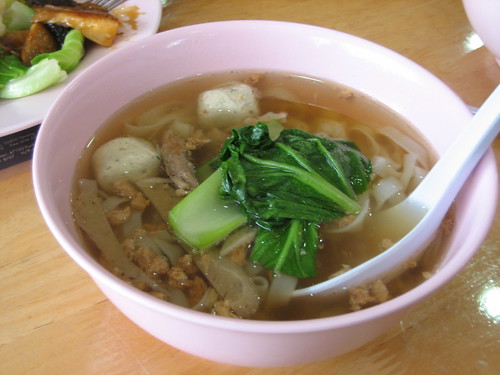
Writing my piece for this was a bit of a challenge - I just spent a lot of time thinking about how I love the food when I go up there, and not so much the practical aspects of being vegan. It's nothing exciting, really - I spend a lot of time in temples and associated restaurants, I get recommendations from family members, I speak a few useful languages and dialects - and these are not necessarily useful pieces of advice to give to people looking to tourist. But oh, how I love the food I eat when I am up there. The endless plates of noodles and the old favourites that I have always loved. My parents are heading up there next week (as part of a cruise - they sleep at night as the ship cruises around SEAsia, and in the morning they wander off the boat and visit whichever friends or family are in the area. I am jealous!), and all I can think about is the things they eat.
I've also got a post up at Vegaroo, on our visit on Sunday to Edgar's Mission for Edgar's 7th birthday. Sadly, after I wrote the post yesterday morning, I discovered that Edgar passed away yesterday.
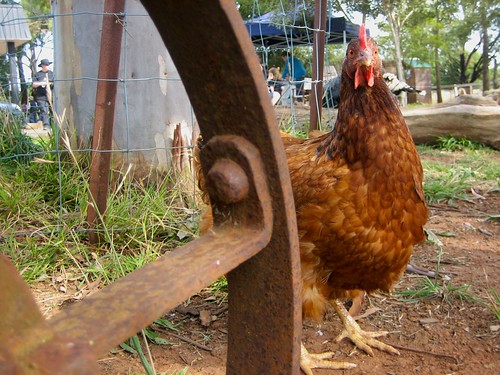
Visiting the Mission made me think quite a lot about our industrial farming complex, and the pressures we place on so many systems. Not like I don't already think about these things a lot! I met some sheep, and some goats, and some cows, and a horse, and some ducks and chickens and pigs. The cows were huge! And so were the pigs! Growing up in the suburbs, I'd never before met many farm animals, so that was exciting. But it's sad to hear how they got there, the dog who was going to be shot because she wasn't efficient enough, the goat who was going to be killed because he was too friendly (and it was becoming dangerous) - but this goat was too friendly because his owners had encouraged it when he was tiny, so we can think of it, really, as a result of human intervention, and not his own fault, that he behaved that way. And we (we as a human whole) should be taking responsibility for that, they way this stuff is, effectively, our fault. My personal refusal to interact with the industrial animal agricultural complex aside, I still think we have a responsibility to them, to treat animals well and not carelessly cast them aside.
RAMBLOR.
Anyway, that's where I'm appearing this week!
Writing my piece for this was a bit of a challenge - I just spent a lot of time thinking about how I love the food when I go up there, and not so much the practical aspects of being vegan. It's nothing exciting, really - I spend a lot of time in temples and associated restaurants, I get recommendations from family members, I speak a few useful languages and dialects - and these are not necessarily useful pieces of advice to give to people looking to tourist. But oh, how I love the food I eat when I am up there. The endless plates of noodles and the old favourites that I have always loved. My parents are heading up there next week (as part of a cruise - they sleep at night as the ship cruises around SEAsia, and in the morning they wander off the boat and visit whichever friends or family are in the area. I am jealous!), and all I can think about is the things they eat.
I've also got a post up at Vegaroo, on our visit on Sunday to Edgar's Mission for Edgar's 7th birthday. Sadly, after I wrote the post yesterday morning, I discovered that Edgar passed away yesterday.
Visiting the Mission made me think quite a lot about our industrial farming complex, and the pressures we place on so many systems. Not like I don't already think about these things a lot! I met some sheep, and some goats, and some cows, and a horse, and some ducks and chickens and pigs. The cows were huge! And so were the pigs! Growing up in the suburbs, I'd never before met many farm animals, so that was exciting. But it's sad to hear how they got there, the dog who was going to be shot because she wasn't efficient enough, the goat who was going to be killed because he was too friendly (and it was becoming dangerous) - but this goat was too friendly because his owners had encouraged it when he was tiny, so we can think of it, really, as a result of human intervention, and not his own fault, that he behaved that way. And we (we as a human whole) should be taking responsibility for that, they way this stuff is, effectively, our fault. My personal refusal to interact with the industrial animal agricultural complex aside, I still think we have a responsibility to them, to treat animals well and not carelessly cast them aside.
RAMBLOR.
Anyway, that's where I'm appearing this week!
Subscribe to:
Comments (Atom)
