Showing posts with label intersections. Show all posts

Tuesday, 7 June 2011

potluck 2: comfort food

Oh dear patient friends, I apologise for the delay in getting this carnival up. But I promise, though it is small and slightly delayed, that it is still a good read. This time the theme was comfort food, and all of these posts are about comfort food! Delicious, comforting food.

If you are one of my usual vegan readers, please note that not all posts linked to today are vegan, but they don't really talk about food specifics and you should read the posts anyway, because they are important and amazing and good.


Oddcellist talks about comfort food:
When I talk about the things I can cook, I tend not to talk about Chinese food—because I don't cook the way my mother does, even though I hear her voice every time I cook (fry the ginger until its flavor blooms, use day-old rice to make fried rice, people here like things too sweet), because I remain incredibly recipe-bound.
Vi writes (and draws!)about small comforts: tāng yuán.

Azuire writes ٹیڑھی کھی, about comfort food that's monolingual (and not):
What I felt when I discovered that اچار was not called that by others (and I know it was اچار because I'd had an argument about it) was shock. Pure and simple. The English names of food-things that had previously existed only hypothetically were now widely accepted as the only names for things. It felt incomplete, inaccurate.
In comfort fooding, Glass_Icarus maps a history of her comfort food.
I've realized that I don't so much rely on specific foods for comfort as I do on cooking and eating with specific groups of people. 火鍋 with my immediate family is different from 火鍋 with my relatives in Taiwan is different from hotpot with all the different permutations of my "usual suspects," friends from ballroom/undergrad. Dim sum with my "American grandma" is different from dim sum with my Chinese family friends (where there's never any explanation involved but the check-grabbing fights remain the same).
Sam Miskiv writes on disordered eating and veganism (and, in a way, comfort food).

Ephemere talks Hapag-kainan, dibdib: My language is one that eats and is eaten. If one is to speak to me of comfort and discomfort -- speak to me of food. And of rice.

Linstar writes about what makes comfort food:
I’ve often been asked what my favourite food is and I have very usually replied with something along the lines of my mum’s laksa or my mum’s spring rolls or something to that effect. My mum’s cooking. It wasn’t until recently when I was sitting down talking to a work colleague that I actually realised some of my favourite comfort foods aren’t necessarily my mum’s cooking at all, but my mum’s cooking brings an association of love and comfort. I’ve actually come to realise my favourite comfort foods are anything that can be shared, and that it’s the company more than anything which makes comfort food comforting.

And a little aside: Counter Culture, a book which collected food histories from the kids that Lifting Voices works with. Their funding deadline is past but the book looks great!


And now, with my spoon in one hand and my chopsticks in the other, I am off to eat my own comfort food, though I failed to blog about it. Thank you for reading Potluck 2! Potluck is intended to be an occasional carnival for multicultural and intersectional discussions of food, including but not limited to food discussions intersecting with disability, gender, sexuality, fat, animal rights, and cultural and racial issues. If you are interested in hosting the next Potluck, please drop myself or glass icarus a line!

Sunday, 15 May 2011

potluck 2: deadline extension!

The deadline for Potluck:2 (Comfort Food) has now been extended until May 31st! That gives you a whole extra two weeks to get something in! Have at it! Just a reminder:
Submissions can cover anything you like, and you do not have to stick to the theme! but please remember that we are trying to talk about intersections. Potluck is, after all, intended to be a carnival for multicultural and intersectional discussions of food, including but not limited to food discussions intersecting with disability, gender, sexuality, fat, animal rights, and cultural and racial issues.
More details at the original post! Please submit! TELL YOUR FRIENDS.

Wednesday, 9 February 2011

some links about animals and food politics and things

unexpectedly a lot of links

Pets petrified in cyclone crisis
Pets were not allowed in the cyclone evacuation centres, while farm animals were in paddocks when Yasi hit.

RSPCA spokesman Michael Beatty says there have been plenty of bird deaths as well as reports of animals wandering the streets.
and No-pet evacuation rules 'putting lives at risk'

Cassowaries are getting help after the cyclone!

Animals in Brazil Suffering After Disastrous Floods

10 Horrifying Stories of Factory Farming Gone Wrong, a pretty gross slideshow (USA-centric)

Sled dogs massacred after Canada Winter Olympics - business dropped off after the Olympics, so the huskies that were brought up specifically for the Olympics were then killed.

In other 'why are humans so crappy' news: Cockfighting bird stabs California man, Jose Luis Ochoa, to death: police. Specifically, cockfighting: why do it?

Back in Australia, an article on the ABC where the risks for jumps jockeys are identified. So if when you're arguing against jumps you find that people don't care about the horses, try this argument instead.

An op ed at the Herald Sun on a new proposal around disposal of young calves.

Where climate and conservation collide
At the state's largest wind farm at Woolnorth in the island's north-west, 19 wedge-tailed eagles are known to have been killed since it began operations in 2003. Another three sea eagles also have hit the rotors.
At Vegans of Color: How NOT to Inspire More People to Go Vegan, on an awareness graphic.

The Face of Exploitation by s.e. smith at This Ain't Livin', on the human exploitation elements of food (both animal and vegetable).

I link to Treehugger way too much, but: Chinese Activists Call Canada Racist For Selling Seal Meat because Canada has sold seal meat to China (perhaps) on the assumption that those Chinese will eat anything.

This is not vego-specific (though our catastrophe's addition at the end is), but how to shop when you are poor is a good post.

at the smh: Wasteland: the $7.8b of food Aussies throw away .

I failed to post about this before call for papers closed, but the 4th Annual Australian Animal Studies Group Conference is being held 10 - 13 July at Griffith Uni in Brisbane.

Potluck #1 is up! Announcement for #2 is coming soon.

Wednesday, 15 December 2010

announcing: potluck (a food carnival of intersectionality)

I love talking about food. And reading about food, and people's experiences with food. So Glass_Icarus and I, inspired by some recent posts (including but not limited to gross, weird, inedible (redux) by vi, Doodh se Dhuli by deepad, and seven things by troisroyaumes), have decided to start an ongoing food carnival, looking at multicultural and intersectional discussions of food.
There are no real limits on theme; however, the focus of the carnival is on thoughts and experiences around food through various topics that you might see around the social justice blogosphere, including but not limited to food discussions intersecting with disability, gender, sexuality, fat, animal rights and of course cultural and racial issues. We welcome you to share your recipes as well as your thoughts and experiences, but we ask that you do not submit posts with recipes only.
Wow, how much stuff did I forget to include in that list? Heaps! This is what happens when you write a blog thing when your headspace is somewhere else (writing learner guides for courses on education for sustainability). Sorry! There are many more various topics that should have been included on that list! And I want to write about them all! Well, I want someone to write about them. I probably can't write about food + being trans, or food + religion, or food + disability. FOR EXAMPLE.

The theme for the first potluck is holidays. Submissions can encompass anything you like, including holidays you might be celebrating nowish (Christmas, Hannukah), or recently (Eid al-Adha), or soon (Lunar New Year), or ages ago. Any holiday or festival.

You can submit in the original announcement post, or via email to glass_icarus AT dreamwidth DOT org, who will be hosting the first edition.

Please feel free to submit links to your own posts or to someone else's. You may submit multiple links. Links will be included at the discretion of the host. We welcome anyone to participate from any blogging platforms. The deadline for submissions for the first edition of Potluck is JANUARY 21, 2011.

This is totally relevant to you, vegans and vegetarians who read my blog! Write about intersectionality and food. DO IT.


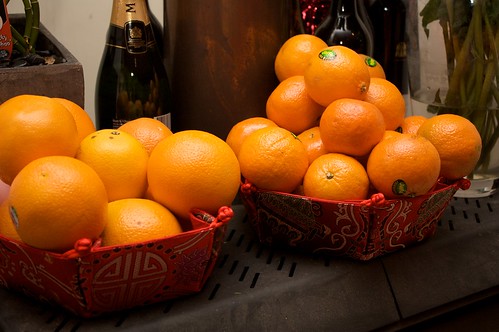
oranges and mandarins are like gold

Monday, 29 November 2010

me + usacentrism + monday morning links

I saw Frente yesterday! Everything else that happened over the weekend pales in comparison. Even the odd election (did you get to vote? I know people who couldn't get to any voting points because of the flooding!).

I realised that, two weeks after the fact, I had yet to post a link in my other blog about my intersectionality talk being up at The Scavenger, so I just did that, and took the opportunity to ramble a bit about the USA-centricity of AR (and other social justice topics) online. If you wanted to come over and weigh in, or give me your thoughts, that would be great! intersectionality 101: addressing racism and classism in animal rights activism (a talk) + USA-centrism.


This slightly odd article has been doing the rounds: The Rise of the Power Vegans. It's an interesting enough read, but I found it odd and I'm not sure why.

Unsurprising but interesting to have in a study: Animal-welfare news sways meat consumers:
News coverage of animal-welfare issues causes U.S. consumers to cut back on meat purchases and spend their money instead on non-meat items, a study indicated.
Cows, Goats Escape from Slaughterhouse, Only to be Forced Back In

I meant to link this a few weeks ago, but: Poultry producer's workers claim intimidation. Miscellaneous worker intimidation might not seem that relevant, though it is in a chook production facility, but I've started collecting these sorts of articles in Australia. One of the barriers to effective AR in Australia (I've found) is that all our information for back up comes from the USA or from Europe, so I think it's important to document the patterns (whether they are similar to those famously documented overseas or not) in order to have solid evidence.

One of the things that frustrates me about working in the environmental/climate change sector, as a vegan, is the fact that people are often really invested in not being vegetarian. This article frustrates me: Eco Friendly Fur or No Such Thing? Not necessarily because I'm like 'no fur no fur!' (though I am): but because an argument that starts with 'but they're a rodent! and they're doing environmental damage!' ignores the suffering aspects. Here is my confession: I totally prioritise reducing environmental damage. And I am very critical of introduced species. But humans, you know, did the introducing! So maybe it is our responsibility to not kill them in the usual painful methods used for getting fur. I'm there for reducing their damage on the environment, but pain is not really the answer.

Tuesday, 23 November 2010

single issue / protest voting: don't do it

There's a line in the talk I gave at the Animal Activists Forum. It was a last minute addition to my talk, but I included it in my edits for the Scavenger because I think it's really important and I feel very strongly about it.

This Saturday is the Victorian state election, and the Coalition Against Duck Shooting is spearheading a voting tactic to 'vote Greens first and Labor last,' based on Labor's policies (or lack thereof) regarding animals. I heard Laurie Levy speak on this at the Animal Activists Forum, and he said that this tactic was based on the success of the Shooter's Party (or something, I can't remember the name) campaigning and voting as a bloc to get things done. He said that this was specifically a campaign targeting the four seats that could potentially fall to the Greens: Northcote, Brunswick, Melbourne and Richmond. And the idea is literally to put the Greens first, and put Labor last. And that's it. That's the strategy.

Protest voting on a single issue is dangerous. It is too simplistic, and too short term. And one that is so targeted as this - it's targeted at these four electorates, as 'vulnerable' electorates, but there's no way to prevent a message like this from spilling over boundaries. And it assumes that - well, specifically, it assumes that the Coalition's promises on animal stuff can be trusted (it can't - look at their history, even just recent history), and it ignores the impact that the Coalition's environmental policies have on habitats, and it ignores all the other issues. It's single issue! If you put the Greens first and the ALP last because of the ALP's failure to act on animal rights issues, you're ignoring every other issue and every other impact.

Vote with your ideology. Vote for someone because you think they might be able to speak for you. Vote for someone because you want them to speak for you, or because the things they say resonate with you. Maybe not all of the things, but most of the things. Don't just do it for one of the things. And your second preference is often just as important as your first, so think about that, too. It's not just a throwaway number in a box. If you want to put the Greens first, do it. And if there's someone else you want to put after them, because they speak to what you believe in, then absolutely do it. This isn't about me making fun of your political party. You vote for who you need to. But don't protest vote. It's dangerous, and it doesn't work. Tactical voting can easily backfire.

Think about your vote, don't just protest it.

Monday, 15 November 2010

intersectionality 101: addressing racism and classism in animal rights activism (a talk)

As you may remember I went to the Gold Coast for a couple of days to present at the Animal Activists Forum. I presented, with Katrina Fox on intersectionality in animal rights. It was mostly a primer, a basic introduction to intersectionality. Going in, I assumed that it would all or mostly be new concepts for people, which is why I made it really basic and really casual, lots of chatty examples and things. No jokes, because I'm not very good at that sort of thing.

If you're interested, the text of my talk is up at The Scavenger: Addressing racism and classism in animal rights activism.

Overall I was quite happy with it. It was very condensed, as we only had thirty minutes between the two of us, so there were lots of leaps and gaps and so much covered, but still, I understand it's the first time this sort of topic has been brought up at the forum, and lots of talking came out of it, and I hope that it's a conversation that can filter through AR in Australia and keep moving, because I find that intersectionality is severely lacking in Australian AR.

Thursday, 4 November 2010

[book review] thanking the monkey

I came to Thanking the Monkey with some skepticism. Karen Dawn was recently in Melbourne giving a talk as a fundraiser for Edgar's Mission, and at the last minute I decided to go, prompted by some enthusiasm from J. I liked the talk well enough; I wasn't blown away by it, but I decided to pick up a copy anyway (all the profits for the copies sold on the night went to Edgar's Mission, too!).

I like to think I know a lot about animal issues, but some of the stuff I was reading totally astounded me. I had to start bookmarking, and now my copy is filled with post it notes and little sticky bits (which I'm going to remove as I type this, so I can lend the book out).

Dawn has an interesting, conversational writing style. She talks up her book as an accessible gift book, and certainly it is very accessible. The book is illustrated with pictures and comics, on the premise that even if you give the book to someone who can't bring themselves to read it, they might flip through and see some of the comics, and take away at least a part of the message.

Thanking the Monkey was written as an all-around animal rights book: at some times it's an introduction, covering the basics, and at other times it's quite in depth and confronting.

There are lots of suggestions of other books to read, as well as video and other online links. The book is heavily (though inconsistently) referenced, which I always enjoy. It's also very easy to pick up and put down, as it's filled with lots of separate sections. This means I felt comfortable putting it down for a week and a half and then coming back to it again.

The chapters are set out in a nice way, too: there's an introductory chapter, one on pets, animal entertainment, clothing, as food, animal testing, green/conservation groups, and 'compassion in action.'

One big thing for me was that, it led to me revising my opinion on zoos. I've always struggled with zoos, not liking the voyeristic/trapped components of it for animals, but recognising the need for conservation. Halfway through the section on zoos, I changed my mind. I'm still there for the conservation efforts, but why do we need zoos to fit in to urban areas? Anyway, me and zoos are definitely over.

The book does have some problems. Like many vegan / animal rights texts, there's some fatphobia. At some points there's an undertone of cultural cluelessness. There's also a sort of something, for certain people. "And some human mothers will hand over a baby for a vial of crack," (pg 254) for example, is a statement that I would like to challenge. The book frequently uses terms like 'normal,' which regular readers of this blog will know I dislike, as it positions some of us as not-normal.

However, I learnt a lot of things that I didn't know. I don't know if it was naiveness or overlooking or what, but as the book went on I was blown away by how much I was bookmarking. A small sampling:
  • "...unlike other mammals, dolphins are not automatic breathers; every breath is a conscious choice, and when life becomes unbearable they can choose to take no more. They commit suicide. He says that much of the early mortality rate of dolphins in captivity is a result of suicide: "We literally bore them to death."" (pg 84)
  • There's type of fur (from lambs - not sure why it's not wool), where the baby lambs are killed at a few days of age, and sometimes even the skin of unborn lambs is used. I'm not sure why unborn lambs horrifies me more than born lambs - maybe because the mother has to be killed too? (pg 107) In the USA (not sure if this extends beyond the USA) coats with less than $150 worth of fur don't have to be labelled as having fur (pg 110).
  • Farmed salmon requires about 2.5 times the same amount of wild fish as food.
  • The WWF, as a conservation society, sometimes positions itself squarely against animal rights (pg 295) - this was cool to read because then, when I was talking to the Wilderness Society people at World Vegan Day, I was able to ask so many questions I'd never previously have considered.
Another thing: Stephen Colbert has an adopted turtle daughter: her name is Stephanie Colburtle. Adorable name!

One final benefit of reading the book, for me, was being able to quote from it for my recent talk at the Animals Australia Forum. I gave a talk on intersectionality, and I had wanted to give examples of why intersectionality is needed in AR. Advised against this, I went the other way: I used Dawn's 2005 article ' Best Friends Need Shelter Too,' reproduced in the book, as an example of how intersectionality takes things in to account. So that was nice.

I recommend the book. It's an interesting read, and I learnt a lot, but I recommend reading it with caution. I'm not sure I would give it as a gift book to people who weren't already interested in AR/AW.

Wednesday, 22 September 2010

exclusionary language; or, we're not all coming from the same place

Being an outrageous vegan, I am against the slaughter of animals. I am hip to all those rallies and I am all there for signing your petition. I am already boycotting those shitty animal products, and I am talking about the crappy things done to animals. But I can't get behind the language that is frequently and commonly used, that is exclusionary, sensationalist and othering. Sometimes it's subtle, and sometimes it's overt, but it is always totally unnecessary, and demonstrates just how easy it is for single issue vegans to gloss over the fact that there is diversity amongst us.

For example, this petition currently up at change.org: The Australian Government Must Ban Brutal Ritual Slaughter Right Now. I can ignore the odd and slightly unprofessional presentation of this petition, because to expect perfect grammar from everyone would be for me to assume that everyone has the same level of education as me, which is classist (for example); or to assume that nobody can be ESL or be unfamiliar with my dialect of English.

What I cannot ignore is language like this: NO, instead it allows this abhorrently cruel ritual slaughter to continue, a practice that should never have been accepted in Australia in the first place. When this language is used in a discussion of religion, particularly in discussion of a religion that is currently being maligned, marginalised and attacked in the media and constructed as a religion of foreign otherness, it creates the suggestion that the religion itself doesn't belong here. More directly, it ties the act (barbaric slaughter) to the religion (Islam), and finishes with the phrase 'should never have been accepted in Australia in the first place.' You can claim all you like that it clearly talks about the practice, but the reality is that it is an othering, unnecessary addition to the petition, and it assumes that all in AR are coming from the same place.

In addition, it ties this practice with 'foreign' in a way that is not necessarily correct - there have been some pretty shitty slaughtering practices in Australia, unrelated to slaughtering for halal, and to claim these practices only exist in Australia because of those dirty filthy foreigners is presumptious.

It is hardly the first AR campaign to do so, and it is unlikely to be the last. There was the PETA 'Save the Whales' campaign, that clearly came from a place of assuming that no veg*ns are fat, and that fat is shameful.

Veganism and the AR movement are often seen as white/Anglo-saxon, middle-class movements, and stuff like this just contributes to it.

After all, there's a reason why I use 'single issue vegan' as an insult.

SOME READERINGS:
s.e. smith wrote a blog post a while ago, I Used to be That Annoying Vegan, that talks about the baseline assumption that everyone has the same access to things, and the same social class, and the same privileges.

On ableism, there was some discussion in the comments of this post at VoC that really highlights it - lots of people basically erasing the experiences of people with disabilities by saying 'well you were doing it wrong,' rather than acknowledging that not everyone is operating from the same base level.

Royce posted at VoC on resisting invocations of coloniality, on the way in which the AR movement often approaches indigenous groups re: treatment of animals; ie, in a really shitty way.

One of the earliest posts on this blog was about the exotification of non-Anglo cultures in the vegan movement, and the othering use of language.

Wednesday, 8 September 2010

isms in our vegan

glass like dreams?

Vegans of Colour summarised the Morrissey thing really well, but in case you missed it, Morrissey declared Chinese people to be a subspecies, on account of the way they* treat animals, which I guess he thinks is much better than the way, say, the UK or the USA treats their animals? I don't know, I'm just guessing. He could be thinking anything. And I'm Chinese, so I probably beat my penguins. Or something.

I always enjoy reading about hypocritical people! It totally makes my day!

Here is my pull quote from the VOC article:
Probably my two biggest gripes about these near-sighted race politic expressions of animal rights are that:

1) they really perpetuate, particularly amongst people of color, the misnomer that veganism can only be narrowly defined as a white, middle-class subculture and that;

2) vegans of color are further marginalized within the discourse of animal rights whether or not we cry foul at the egregious white-supremacist twists on these representations of animal rights politics.

As with Morrissey as well as the rest of the white animal rights crowd, here’s a itsy-bitsy tip when attempting to articulate a discourse about animal rights: a little nuance goes a long way in figuring out where the root of the problem lies and where the solution can begin. The intersection of race and ethnicity between veganism is much more complex than you might make it out to be.
The comments to the VOC post include a charmer about how China should be wiped from the earth is...well, that's lovely, but until you wipe every other country from the earth I'm just going to sit here and try to dull my hatred of hypocrisy, you know?

I'm working on a post about classism in the veganism and ethical food movements (I know you can't wait, you're just lucky I've been sick), but in the meantime, here are some tumblr and other links that you might be interested in reading:GOOD TIMES!

Leave exciting linkies in the comments.


*WE HELLO

Monday, 24 May 2010

hear me roar: a forum to consider the parallels and intersections between equal rights and animal rights and society and law (a talk)

Last week I attended a lecture at Victoria University, organised by Lawyers for Animals and Victorian Women Lawyers. Entitled 'Hear Me Roar: A forum to consider the parallels and intersections between equal rights and animal rights in society and law,' I was interested but cautious. The speakers were Moira Rayner ('Freelance writer, lawyer, academic and Executive Member, Lawyers for Animals') and Dr Siobhan O'Sullivan ('Research fellow, School of Social and Political Sciences, University of Melbourne; Member, Oxford Centre for Animal Ethics; and Member, Secretariat of Barristers' Animal Welfare Panel').

O'Sullivan spoke to the topic 'Animal Invisibility and Animal Suffering: what can feminism and refugee rights teach us about insidious animal suffering?' I am always cautious about talks/topics that seek to compare one issue to another, just because this so often results in the further marginalisation of one of those groups, or some form of oppression olympics (or, my favourite, 'XX is the last acceptable oppression.'). Appropriation is also often a big part of it. Anyway, that's why I was cautious but interested going in.

O'Sullivan highlighted the way, in the animal protection movement, it is often women who do the work, but men who right books and speak. She noted Adams as an exception to this,* and as someone who drew the link between commodities.

Animals as commodities, women as commodities. This is part of the idea of public and private, and why she uses the term 'invisible suffering.' This is where women's and refugee rights come in to it - these two groups have previously had to deal with invisible suffering.

She also talked about liberal democracy, and how it works on a group functionality - therefore as an individual it is problematic to complain.

The idea of the public/private divide can be seen in how laws around animals have progressed: the first laws were for beasts of burden, because these were the animals on the street, these were the animals one could see abused. It was not for many years afterwards until laws were extended to companion animals, and O'Sullivan's contention is that this is because companion animals were in private.

She points out that there is a similar ish problem in refugee rights - it is very difficult to hear refugees speak, and it can be very difficult to gain access to refugees and see/'believe' their treatment, as they are housed away from the mainstream community. Do they really need to be housed away from the community, on Christmas Island? Or is it just so that we can't see them, and therefore can't understand what's going on?

Rayner spoke without a powerpoint (!!), and talked less about the idea of gender and more about the idea of power. She emphasised that Australians are very uncomfortable with talk about rights unless it is in regard to self rights. Rayner took a very large over-reaching approach, talking about many countries around the world, and many issues, especially regarding dependency relationships (such as children, animals, disabled persons), and linked these relationships all to power. She also included a bit of a rights history, talking about how the giving of rights was first to animals, then to children, and then to women, and then to racism and religious persecution.

Rayner circled around with some action points for animal rights activism, that have clearly drawn from other forms of rights activism, and also that I think can be a good reminder in other forms of rights activism:
  • change language leads to a change in perspective - therefore use language carefully
  • advocate for rights
  • appeal for feminists who stand up for rights of women, dependents, and other marginalised groups to extend to animals
O'Sullivan talked around some interesting topics, but didn't really go in to them in depth. Rayner talked quite a specific topic and also circled it around (which is hard to demostrate in my notes), and was quite thought provoking. The talks were brief, which can make it difficult to talk in depth, I acknowledge this, but I felt like in some regards they were just a bit too surface-y.

My concerns regarding appropriation and eyebrow raising were not unfounded but there were no sirens going off, and my notes only include three uses of the red pen, which was good. This is mostly, though, because it was a lot about what feminism can do for animal rights/the lessons learned, rather than anything else.

In many ways it was clear that this talk was to a generalised, nebulous feminist/ medium-engagement woman (the white, middle-class, western-world sort), and kind of a low-level discussion (nothing too heavy or controversial, unless you think animal rights are controversial) but the discussions of intersectionality and links between oppressions were at least there, which I always appreciate.

There are some things I would have liked to see discussed, or things that could be discussed subsequently. I would have liked to talk more about the intersections - there was some talk about domestic abuse, and I thought that the points about public/private were very interesting, but I would have liked to talk about the intersections more. I definitely want to talk more about power and how that translates to a lack of power and privilege for certain groups. I would also like to talk about the economic and cultural assumptions surrounding a lot of the talk of animal rights - I know we were talking from an Australian legal basis, but there were lots of examples from other countries and they were all of a certain type of culture and yes.

Flowing on from that, and unrelated to animal rights, I want to talk about the racism in refugee rights and how that relates to the public/private, but that is for another time. :o)


*please note that I have issues with Adams, which are touched on here and here.

Wednesday, 24 March 2010

the ability to make choices

In the post Elitism and the Movement, Prof Susurro discusses the idea that veganism as a movement has played a role in perpetuating a classist discource. She interrogates this idea, which was a riff off a post at Vegans of Colour asking does second-hand figure into your ethics equation. Prof Susurro's point was that questions that position 'choice' as the key element imply that all vegans have this choice, ie, can afford to/have the ability to make this choice. Framing it in this way erases vegans who don't fit into a middle/upper class position.

Prof Susurro's entire post is very interesting, as are the comments on both posts. The comments especially really interrogate a lot of intersections with veganism, including transphobia and feminism and racism. I know that when I write my blog, my assumption is that my audience are middle-upper class, well-educated, and (based on who comments) primarily white. And for the most part, vegan or vegetarian. I tend to assume that we are all operating from certain privileges regarding free time and class and available cash, but I acknowledge that whilst that is my reader base, that is not the reality of all vegans or vegetarians (or people who would like to be vegans or vegetarians but cannot make that choice).*

A lot of what I read around the blogosphere is about people making 'wrong' choices, and about how veganism is cheaper than other, animal-exploitative options, but statements whose base message is that fail to recognise that for some people, there is no option in there to choose.

Anyway, Prof Susurro's post really got me thinking about the ways that I can a) enable people less privileged than me to be able to make a vegan choice if they want to, and b) make veganism more accessible. It's also got me thinking about the assumptions that I make, and how judge-y I can be as a vegan sometimes. Lots of thinking. It's an interesting post! I really recommend reading it, and the comments (though some of the comments get very deraily and defensive). And if you've never encountered intersections before, it's not a bad post in which to get an introduction.


*an aside: I mostly know Malaysian and Chinese non-vegans! So if you have any Malaysian or Chinese vego buddies, please feel free to hook me up.

Monday, 15 June 2009

the disconnect of veganism; continuous othering

There's an interesting post at Vegans of Colour on how veganism may disconnect a vegan from their culture: Veganism and Cultures of Origin. In the first year or so, I felt very distanced from the sharing/togetherness of festivals. Getting used to fake-meat products as substitution has definitely helped decrease that distance, particularly as due to their original purpose (as substitute at religious festivals where no meat is eaten) they are tasty and easy to substitute, so often now at festivals we don't have "this is the meat version, this is the veggie version;" instead we have "here are all the dishes," and D and I get to share in the passing of food around the table, in the sharing and the complimenting and the fighting over the last piece. And we get to share in the superstition, the fish for abundance and the duck for prosperity and so on, and these are some of the most important elements of how we propagate our traditions.

Being vegan now highlights and emphasises the difference - as mixed-race, particularly as someone who spent her formative years in Australia, I'm often considered not Chinese enough. Now that I don't eat meat (and don't eat egg tarts), I'm frequently considered not-Chinese enough, and though I've spent years working hard to define my own identity, to be as Chinese and as Anglo and as Australian as I want to be, sometimes being told I'm 'completely westernised' by someone is incredibly demoralising.

I've blogged before about how vegetarianism/veganism is often spoken of as an "ethnic" thing, Asian or African or something "exotic." You can be vegan or not, regardless of your ethnicity, regardless of your cultural background, but it's approached, particularly in Western media and blogging circles, as something that only "ethnic" food lends itself to (and oh, how I hate that word in this context). So it was particularly galling to read an article that was both homophobic as well as othering to the food I grew up with as Chinese, and that I eat a lot of now as vegan, the article is Soy is making kids 'gay.' It's hardly from a reputable source, but galling and othering all the same.

It's like everywhere I turn, as a Chinese vegan, there is an opportunity for me to be categorised as other. It's not as awesome as you might think.

reunion dinner: fish = plenty

Thursday, 7 August 2008

talking about things to eat

It's IBARW this week. I don't talk about racism in this blog, because this blog is just about food. However this blog is specifically about how being Chinese-Anglo by way of SEA and living in Australia impacts my veganism and vice versa, and I'd like to take a moment to talk about food, ethnicity and language.

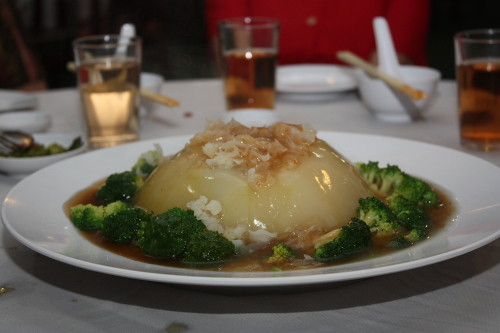
wintermelon

talking about things to eat
(or: how the words people use to describe food make me feel like a freak)


Growing up as a child, I was familiar with roasts and pasta and pizza and sausage rolls and all sorts of different foods, but almost always when I went home we'd be eating the sorts of things my mother ate as a child, Malaysian and Chinese and Indian, for the most part. We used to eat noodles all the time, and I was ten before I found out not everyone ate rice several times a day. I used to go to the Chinese butcher where I'd peer at whole animals and feet and things, but I know that not everyone grew up this way. I know that this is cultural and it is social and yeah, it has a bit to do with being Chinese from Malaysia.

When we first went vegetarian, the problems this caused for my family and the problems it caused for D's family were quite different.

longan

Feeding us at regular family dinners was not a problem for my mother. Chinese cuisine considers meat as just another ingredient, so altering noodles, curries, and other dishes was as simple as exchanging one ingredient for another. Our meals remained mostly the same. My mother didn't blink at the shift to veganism – about 90% of people of Asian descent are lactose intolerant, so we've never been big dairy consumers – though the loss of eggs threw her for a bit. The real intellectual problem came at holiday events, where dishes become less about tradition (which I tend to view as alterable) and more about superstition – I don't eat fish anymore, so how can I court abundance? I don't eat duck, so how can I show prosperity?

Compare this then to D's family, who eat mostly European/English dishes. For D's mother, feeding us was problematic. We were served a whole lot of dishes made primarily of cheese, and Christmas was a meal of boiled vegetables and cauliflower cheese (note to all who have dinner parties at Christmas: this does not count as a meal). The shift to veganism completely petrified D's grandmother, who literally couldn't think of a single dish to serve us that wasn't a garden salad. So this situation is impacting them differently, but they're trying to think outside what is familiar to them, outside their squares, and they're trying new recipes which I think is worrying them, these unfamiliar paths.

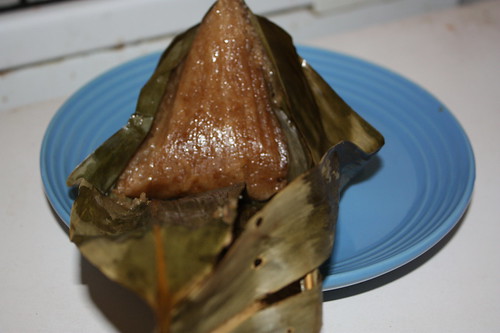
ba cheng

It's interesting, the ways in which we think of food. People have such different backgrounds, and such different habits and histories, but we get used to these things and that's reflected in the ways we think about food. Chinese cooking places so much emphasis on a tiny bit of this, a tiny bit of that, but all elements are essential, and so my mother said to me once, "How can you be Chinese if you don't eat meat?" just the same as I believe she would have asked how I could be Chinese if I didn't eat vegetables, or mushrooms, or rice. Over the years I've become more familiar with English/European food, but it seems so much more focused on the big hunks of things, and so D's family's reaction was (and for some of them, still is) more along the lines of, "But what can you eat?"

I read Jay Rayner's attempt at a week of veganism, where he suggests that "ethnic is the default position for the vegan." I bet he uses 'exotic' ingredients in his cooking, too. I have an ethnicity; we all have ethnicities: the fact that the food I grew up with is easier to veganise than the stuff he ate as a child doesn't make me 'ethnic,' it makes me Chinese. Using these words trivializes the decision I have made to be vegan, and it others my family and my whole freaking life, because using words like that aren't just saying that I'm 'different,' they're saying that I'm 'other.' And he is not alone in this, many people are guilty of this all the time. That you're trying something you've never before heard of doesn't make it 'exotic,' it makes it new to you. And you definitely don't get to describe it as exotic if you're talking about it on the internet - there's a good chance it's not new to your readers. Just because the things I did as a child are different doesn't make me special, and I certainly don't want to feel like a freak. And I realise it's just semantics but semantics are important, because they indicate attitudes - so really, it's not that I have a problem with the word 'exotic,' it's that I have a problem with the attitude that leads to its use, that the food I eat is 'not normal,' that it is other, that I am other.

char kuay teow

A guy I know can't pronounce char kuay teow, he always calls it 'koi char' and he thinks that's hysterical. So he can't pronounce the name of a dish that I've been eating since I was little, growing up in the same country as he did, because it's made up of words he's never been bothered learning. Why is that funny? If anything, it's a little sad for him – I can pronounce everything that he eats. If it's anything else, it's a reflection of his privilege, and it's racist – it's different so it's funny. And it makes me feel like a freak, and it makes me hate him.

My food is not exotic because it's different from your food, it's just my food. And it's not ethnic because that doesn't mean what you think it means. I have enough trouble trying to work out how to incorporate the old food superstitions into my life as it is: I don't need to feel like some sort of foreign novelty whilst I'm doing it. So do me a favour and mind your language.


(With thanks to J + L for reviewing this for me)